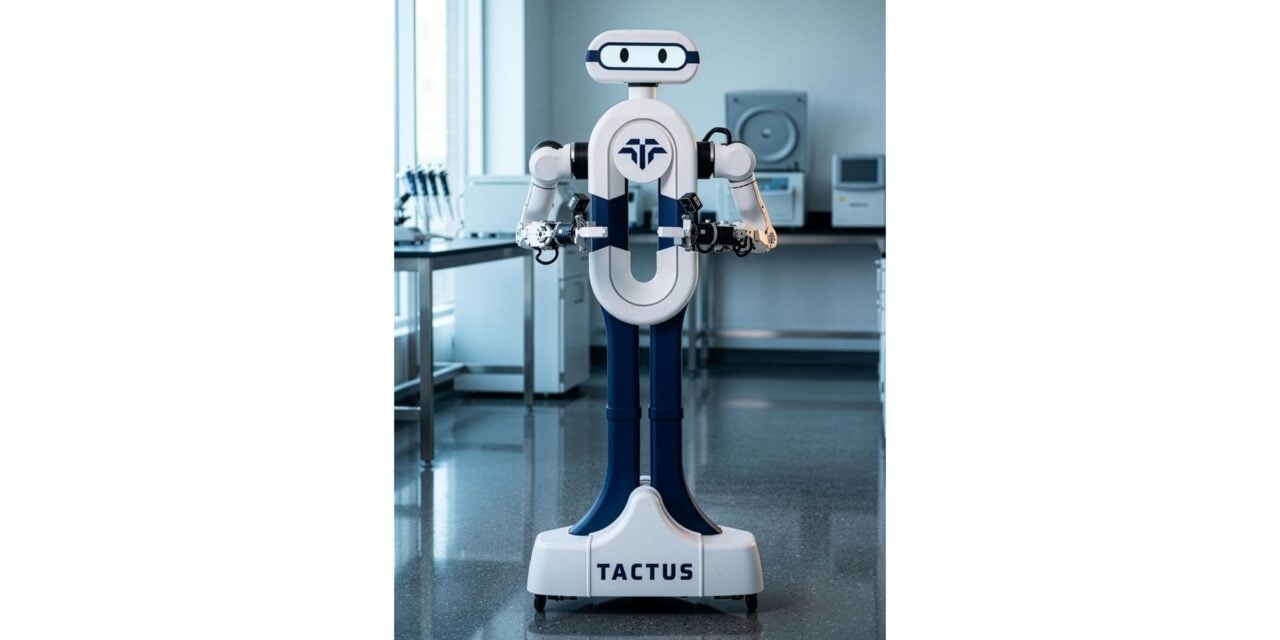
The autonomous assistant is designed to operate existing laboratory instruments using a facility’s validated procedures.
Tactus AI introduced Elsie, an autonomous humanoid laboratory assistant, at the 2026 Association for Diagnostics & Laboratory Medicine (ADLM) Annual Scientific Meeting & Clinical Lab Expo. The assistant is designed to work at the clinical laboratory bench alongside human staff, according to a press release from the company.
Powered by physical artificial intelligence, the two-armed assistant moves throughout the laboratory and utilizes sensors for touch, force, depth, and machine vision. The system is designed to operate a laboratory’s existing instruments without requiring retooling or equipment replacement, the company says.
The technology arrives as the US Bureau of Labor Statistics projects approximately 22,600 annual openings for clinical laboratory technologists and technicians through 2034. Additionally, a 2024 vacancy survey from the American Society for Clinical Pathology reported a 28% vacancy rate in anatomic pathology, with rates between 7% and 15% common across most departments.
“Labs aren’t short on automation. They’re short on hands,” says Michael Quick, chief commercial officer of Tactus AI, in a release. “Most labs own instruments that could run far more hours than they do. What’s missing is a trained operator to keep them running. That’s what we built Elsie to do, and she does it on the bench using the SOPs a lab already has, instead of asking the lab to rebuild around a robot.”
The Tactus platform consists of three components: the humanoid assistant, a laboratory orchestration platform to manage multi-step protocols, and a skill library containing validated capabilities. The assistant is built to perform six categories of tasks: monitoring instruments and flagging exceptions, moving samples and reagents, running tests according to validated standard operating procedures, clearing first-line faults, performing routine cleaning and calibration, and logging actions to the platform.
To ensure accuracy, Tactus AI uses customer inputs to create a digital twin of the laboratory bench. This physics-accurate simulation allows the assistant’s policies to be tested across hundreds of runs before touching a live sample. Each skill is then validated on-site against the laboratory’s specific criteria. No processes run live until the facility’s quality assurance team provides approval, according to the press release.
The platform adheres to security and privacy standards, including ISO 27001, SOC 2 Type II, and compliance with the Health Insurance Portability and Accountability Act and General Data Protection Regulation.
Tactus AI plans to select three to five launch laboratories this year, with initial pilots scheduled for US academic medical centers. Each engagement begins with a readiness review covering the physical site, instruments, workflow, and data systems. The company provides a report within 30 days to establish a roadmap and pilot scope, the company says.
Photo caption: Elsie
Photo credit: Tactus AI