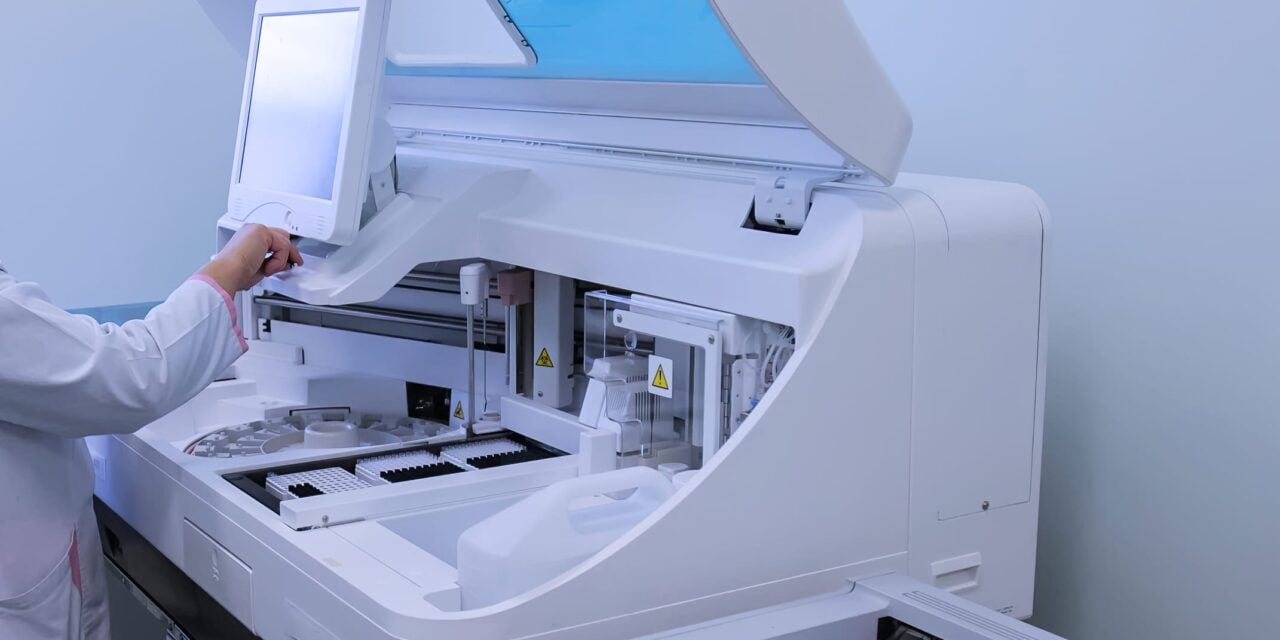
Many labs consider themselves automated, but manual steps persist. Here’s where automation is working, where it’s falling short, and how some labs are starting to close the gaps.
By Alyx Arnett
Ask a lab director whether their facility is automated, and many would say yes. But in reality, labs are often less automated than they think, according to Jenny Bull, success director at LigoLab.
“The majority are partially automated—and many are less automated than they think they are,” Bull says. “Labs tend to equate having an analyzer on a track or a laboratory information system (LIS) in place with being ‘automated,’ but when you actually walk the workflow, you find manual handoffs everywhere. Someone is printing a paper requisition. Someone is hand-entering demographics. Someone is manually reviewing every result before release.”
That gap becomes clearer as labs face increasing operational pressure, including staffing shortages, rising test volumes, and financial constraints, Bull says. In some cases, she says, labs are beginning to use data—such as turnaround time analytics and workflow dashboards—to identify bottlenecks and target automation where it will have the most impact.
Where Automation Has Taken Hold
Much of the analytical phase—instrument interfacing, bidirectional communication, auto-verification, and reflex testing—has been in place for years, driven largely by instrument manufacturers, Bull says.
More recent gains are happening on either side of that middle step. On the front end, automation around order entry, specimen accessioning, and barcode-driven specimen tracking is reducing hands-on time and errors. On the back end, auto-release of results, automated report generation, and CPT/ICD coding are helping shift staff away from routine review work, according to Bull.
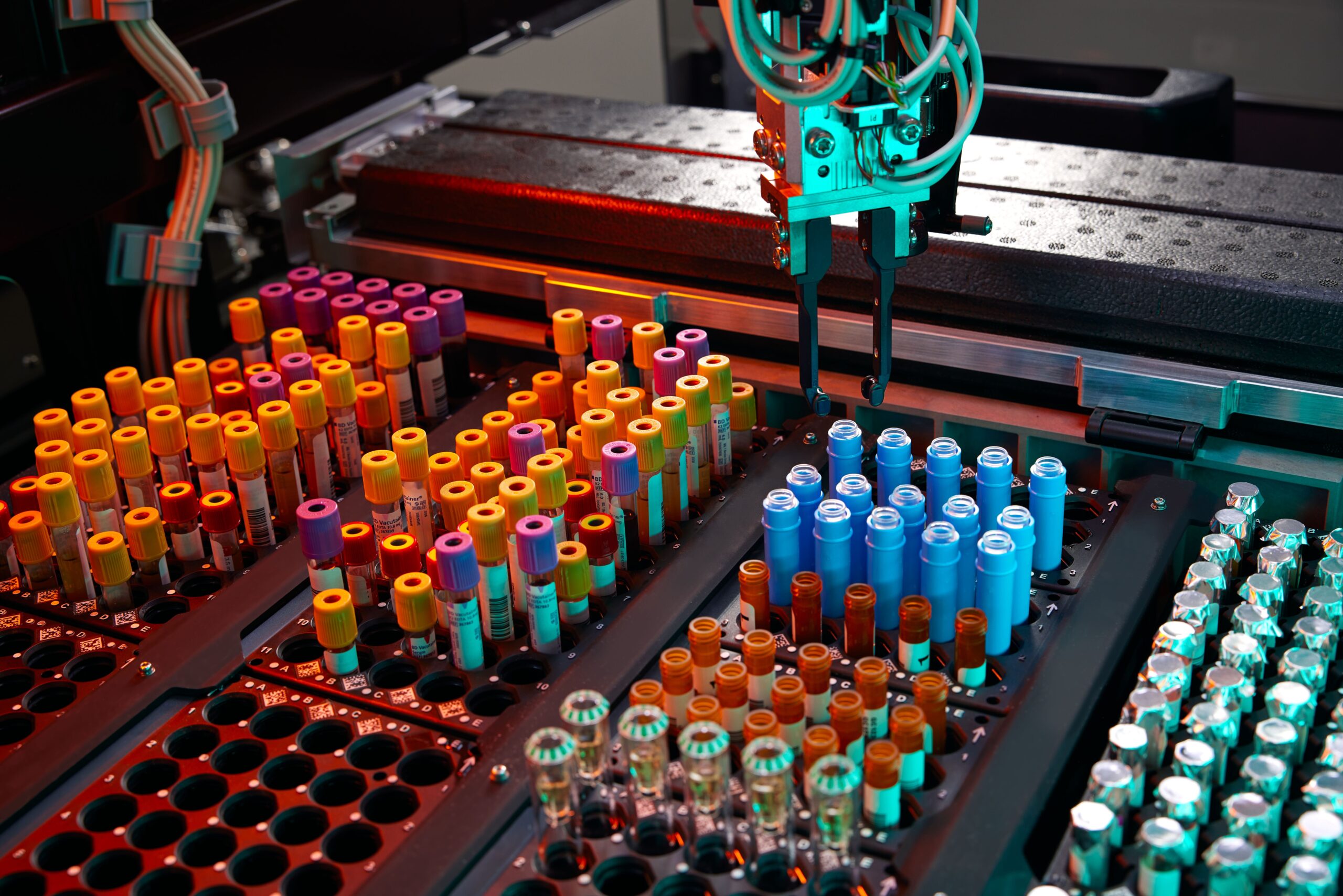
Siemens Healthineers’ Alex Cameron, head of Atellica Solutions marketing and diagnostics, describes a similar pattern. “Pre-analytical processes have seen some of the greatest improvements,” he says. “Automating steps such as sample sorting, centrifugation, decapping, and routing significantly reduces hands-on time, minimizes the risk of specimen errors, and compresses turnaround times.”
In pathology, the gains look different but follow a similar shift toward earlier access and less manual handling. Lisa-Jean Clifford, president of Gestalt Diagnostics, points to digital pathology as a key example. When an image management system is integrated with the LIS, she says, slides can be scanned and automatically associated with a case as soon as they are available.
“This allows the pathologist to receive and begin interpreting that case within hours, not days, regardless of their physical location,” she says. “And if slides require additional stains, the pathologist can order them real-time and get the updated image back later that same day.”
The Bookends Are Still the Problem
Despite these advances, manual steps are often still at the edges of the workflow—and sometimes in places labs don’t expect.
Specimen receipt and accessioning remain a mixed bag, Bull says. Some labs have strong barcode-driven intake processes; others are still dealing with handwritten requisitions, manual data entry, and paper-based tracking. That gap, she adds, tends to correlate with the age and capability of the LIS.
Client and physician communication is another area where automation often falls short, Bull says. Calling or faxing results, handling add-on requests, and managing critical value notifications are often only partially automated and rarely hands-off, she says. Add-on orders, in particular, often arrive by phone, fax, or email and require staff to locate the specimen, verify stability, enter the new order, and communicate with the ordering provider.
“The automation often stops at the original order,” Bull says.
Cameron notes that even in labs with advanced automation, result review and exception management remain the primary consumers of staff time. “A meaningful share of results still require human validation prior to release, driven by delta checks, critical values, QC flags, or instrument alerts,” he says.
Clifford identifies “the actual accessioning process and in case and glass routing” as a persistent bottleneck in anatomic pathology. Manual matching of slides to cases, tracking down missing glass, and ordering stains that don’t come back until the next day all slow the pathologist down, she says.
Billing: The Overlooked Bottleneck
Financial workflow automation often gets less attention than other parts of the lab, according to Bull. She says a surprising number of labs still have staff manually assigning CPT codes or reconciling claims—a legacy of treating billing as a back-office function separate from the LIS.
“This is an area ripe for automation, but often neglected,” Bull says. In labs she has worked with, moving from a manual, end-of-day batch billing process to real-time, integrated coding and claim preparation—starting at the point of order entry—has reduced hours of daily rework and improved revenue capture.
Integration Gaps and Expensive Workarounds
When asked where automation most often stalls, stakeholders point to integration.
Bull describes a common pattern: “Labs frequently operate with systems that don’t talk to each other well. The LIS doesn’t fully integrate with the billing system. The billing system doesn’t integrate with the EHR. The middleware sits between instruments and the LIS but creates its own data silo. Every gap between systems creates a manual workaround, and those workarounds accumulate.”
That often leads to what Bull calls “swivel chair” data management—staff toggling between systems and manually re-entering or copying data from one screen to another. Some labs use custom middleware or CSV exports to bridge gaps, but those solutions can be fragile, she says. When one system updates, the connection can break.
Cameron describes a similar reality when systems aren’t fully integrated. “Manual intervention remains common,” he says. “Staff may need to transfer samples between systems, re-enter data, or navigate multiple software interfaces to track a specimen’s status end to end.” In some labs, he adds, dedicated staff serve as the connective tissue between systems—“effectively acting as ‘human middleware’ to keep workflows moving.”
Clifford says poor integration creates problems beyond efficiency. “It makes for a very clunky workflow that is not streamlined or intuitive,” she says. “There can be additional manual checks and a lack of confidence in the usage of these systems, which can even lead to diminished or stunted adoption.”
Over time, Cameron says, many organizations address these challenges by standardizing instruments and informatics platforms across sites to reduce integration complexity.
Both Bull and Cameron say resolving these issues requires workflow redesign and staff training—not just new technology.
What Automation Doesn’t Fix
Even in highly automated labs, certain tasks still depend on human judgment. Microbiology is one of the clearest examples, Bull says. Culture reading, organism identification from morphology, and susceptibility interpretation require expertise that automation can assist with but not replace, according to Bull.
Quality management and regulatory compliance—proficiency testing, competency assessments, and CAP/CLIA inspection preparation—remain largely manual and documentation-heavy, Cameron says. Instrument management, including calibrations, maintenance, troubleshooting, and reagent inventory, also remains hands-on and takes more staff time than many labs expect, Bull adds.
Cameron cautions against the expectation that automation will eliminate the need for skilled professionals. “The work that remains—result interpretation, troubleshooting, quality oversight, and clinical consultation—is inherently complex and requires expertise and judgment,” he says.
Bull adds that the idea of “set it and forget it” automation is one of the most common mismatches between expectation and reality. “Automation requires ongoing attention—rules need to be reviewed and updated, workflows need to be refined as test menus change, and staff need to understand how to work effectively alongside automated processes,” she says.
She notes that during implementation, labs may initially need more staff support—not less—as teams adapt to new workflows before efficiency gains are realized.
Clifford raises a similar point about AI. “Most AI is an aide—a tool for the pathologist or technologist to use,” she says. “It is also not 100% accurate on every application. Models are built, tuned, and validated on very specific criteria—not every permutation of what a lab might envision them to work for.”
The Payoff When It Works
When automation is well-targeted, the operational impact can be substantial, according to Bull. She describes a composite case representative of several independent labs: a mid-sized facility processing around 1,500 specimens per day, running an aging LIS with a separate billing system and heavy reliance on paper.
In that example, she says, moving to an integrated platform with a rules-based automation engine shifted accessioning from fully manual data entry to OCR-based batch scanning—freeing up roughly two full-time equivalents’ worth of daily effort. Auto-verification rules covered about 75% of results, and the lab was able to absorb a 20% to 30% increase in volume without adding headcount.
In these environments, review shifts to an exception-based model, where staff focus on flagged or abnormal results rather than reviewing every case, Bull says.
Cameron reports similar results. Labs implementing integrated analyzer automation have seen manual workflow steps reduced by approximately 75%, he says. Walkaway time increases, enabling labs to sustain throughput during shift changes and overnight periods with fewer staff on site.
What Comes Next
Looking ahead, stakeholders point to near-term gains in areas such as AI-assisted order validation, predictive workload management, and revenue cycle automation. Digital pathology and AI-assisted morphology review are also expected to continue advancing, particularly for screening and flagging cases that need human review, according to Clifford. Robotics—both stationary and mobile—are beginning to address specimen transport and reagent replenishment, Cameron says.
But the broader takeaway is consistent: The goal is augmentation, not replacement. “The labs that will thrive are the ones that use automation to handle the routine so their people can focus on the complex, the exceptional, and the strategic,” Bull says. “That’s always been the real promise of automation in laboratory medicine—not replacing people, but freeing them to do the work that only people can do.”
ID 433866483 © Vital Hil | Dreamstime.com
Alyx Arnett is chief editor of CLP. Questions or comments? Email [email protected].