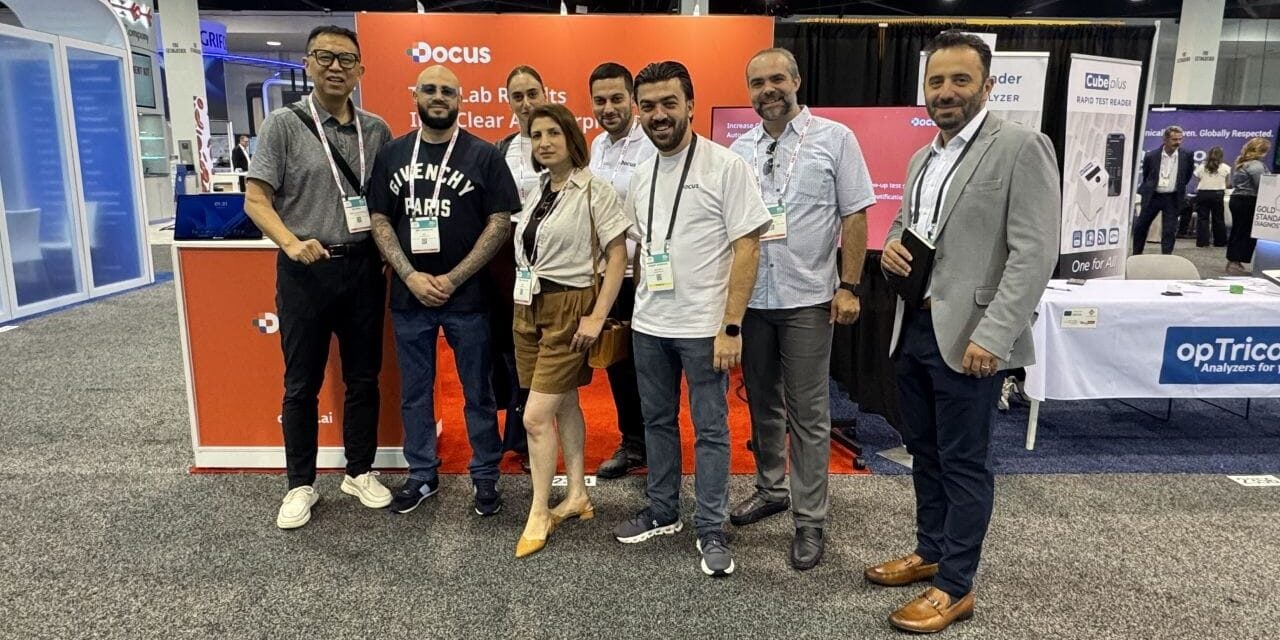
The platform provides interpretation, follow-up, and compliance support while integrating with existing laboratory information systems.
Docus demonstrated its artificial intelligence platform for diagnostic laboratories at the Association for Diagnostics & Laboratory Medicine 2026 meeting. The platform allows laboratories to add AI-powered features for reporting, patient follow-up, compliance, and test ordering while continuing to use existing laboratory information systems and operational workflows.
“ADLM reinforced our view that laboratories are not looking for AI for its own sake,” says Robert Sargsyan, CEO of Docus, in a release. “They need practical tools that fit into existing workflows, reduce operational friction, improve follow-up, and help teams identify potential risks earlier.”
The platform is designed for reference laboratories, direct-to-consumer laboratories, and in-house laboratories. Docus can connect with existing systems through application programming interface or Health Level Seven integrations, or it can be used without a technical integration, according to a release from the company.
Core AI Capabilities
The platform features four primary capabilities demonstrated at the meeting:
- AI-powered interpretation reports that provide structured clinical insights for healthcare professionals and patient-friendly explanations of laboratory results.
- Automated follow-ups to help laboratories identify patients due for repeat testing and support personalized reminders based on available information.
- An AI Compliance Agent that flags potential issues related to International Classification of Diseases and test alignment, payer-specific requirements, testing frequency, duplicate testing, and documentation quality.
- Digital requisitions to assist laboratories in collecting more complete test orders and generating medical necessity documentation based on clinical context, selected tests, and provider-selected diagnosis codes.
Integration and Workflow Support
The system is intended to serve as a support layer within existing laboratory and provider workflows. Clinical decisions and the selection of diagnosis codes remain the responsibility of qualified healthcare professionals, while coverage and reimbursement decisions remain subject to applicable payer policies, according to Docus.
The company says the conversations held with laboratory leaders during the event in Anaheim will influence the ongoing development of the platform.
Photo credit: Docus team at the ADLM meeting
Photo credit: Docus