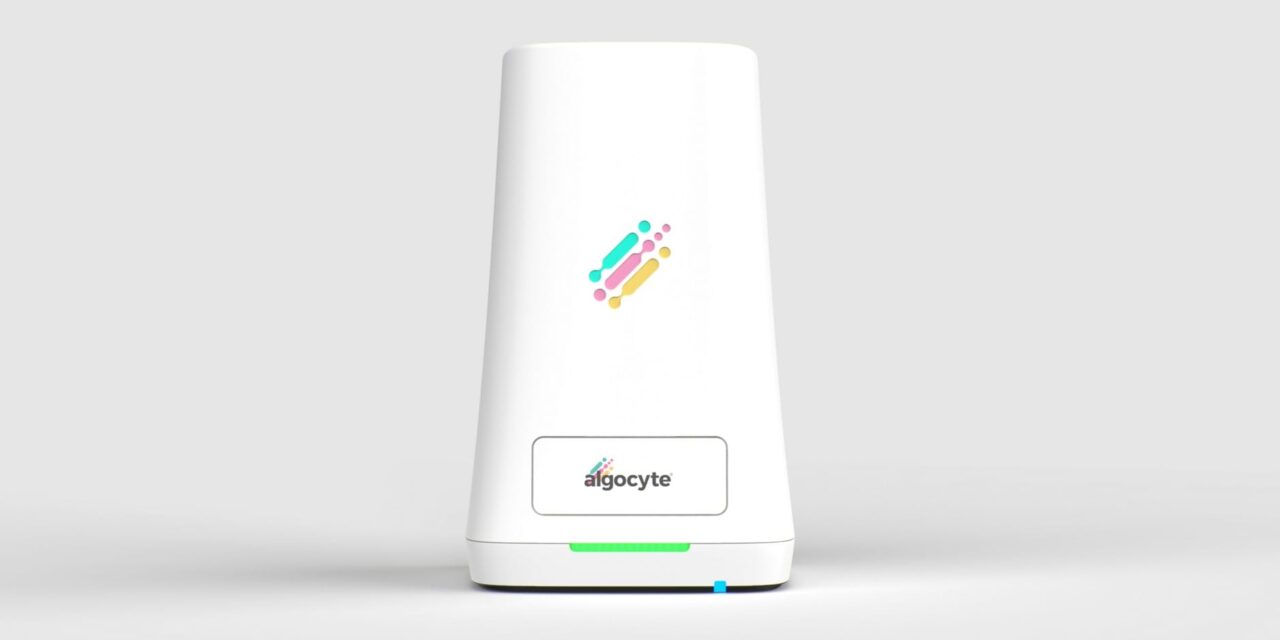
The PROXIMA Mobile Health Station uses sensors and artificial intelligence to provide digital results from finger-prick samples for longitudinal monitoring.
Algocyte, a King’s College London spinout, has developed a portable blood testing device designed to allow patients to monitor their health from home through a mobile application. The PROXIMA Mobile Health Station uses sensors and artificial intelligence (AI) to analyze blood samples on the spot.
Algocyte announced the launch of the Algocyte PROXIMA Mobile Health Station at an event hosted at the Royal Society of Medicine in London in late June where the company presented the current capabilities and future direction of its physics-informed AI technology designed for regular and remote health monitoring at home.
The device requires a small blood sample collected through minimally invasive methods, such as finger pricking. Instead of sending samples to a laboratory, the device’s sensors measure properties of the blood, which are then analyzed by AI algorithms to generate results that can be shared digitally with clinicians and patients.
While traditional blood tests provide a snapshot of health at a single point in time, this technology is designed to identify small changes in an individual’s health over a longer period. The tool is intended for patients who require regular monitoring, such as those undergoing chemotherapy or those using medications like clozapine that require frequent blood cell level checks.
“This technology could have a real-world impact on the many patients receiving treatments that would benefit from regular blood monitoring, such as chemotherapy or the use of medicines like clozapine, which require close monitoring of blood cell levels due to potential side effects or complications,” says Hector Zenil, founder and CEO of Algocyte and associate professor in healthcare engineering at King’s College London, in a release.
Regulatory Status and Deployment
The device has achieved the United Kingdom Conformity Assessed regulatory mark, indicating it complies with health, safety, and environmental protection standards in the UK. It is currently progressing through further testing and evaluation in commercial deployment.
The technology brings together expertise in AI, bioengineering, computational biology, and clinical medicine. According to the company, the device could help reduce the burden on healthcare systems by allowing patients to perform routine monitoring at home rather than visiting a hospital or general practitioner.
“This achievement demonstrates how academia and industry can work together to deliver meaningful social impact,” says Zenil in a release.
Algocyte is continuing to gather scientific evidence and complete further regulatory steps to make the technology available for predictive purposes and in different clinical settings.
Photo caption: Algocyte PROXIMA Mobile Health Station
Photo credit: Algocyte