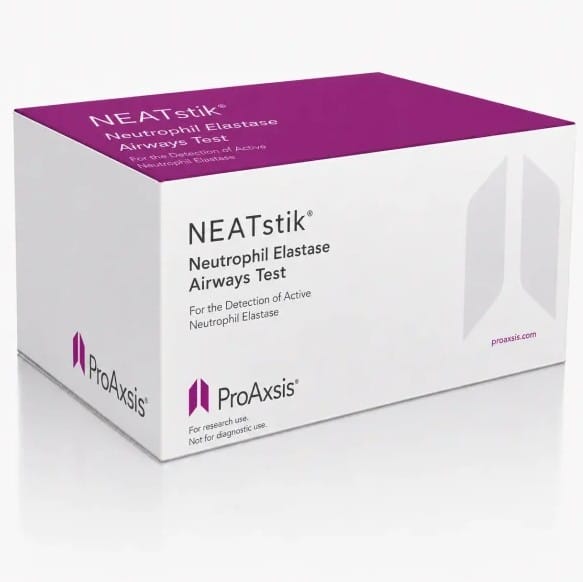
The 21-month clinical research study with Imperial College London will assess the diagnostic value of a lateral flow test for active neutrophil elastase.
ProAxsis is expanding its respiratory research through a collaboration with Imperial College London to evaluate a point-of-use diagnostic tool for chronic obstructive pulmonary disease (COPD). The study focuses on the NEATstik test, which identifies active neutrophil elastase in patients experiencing exacerbations of the disease.
COPD is a chronic respiratory condition characterized by airway inflammation that affects more than 200 million people globally, according to a press release from ProAxsis. The ongoing 21-month study aims to provide an initial assessment of the test’s diagnostic value in this population, with results expected by mid-2027.
Lateral Flow Technology for Respiratory Monitoring
The NEATstik is a lateral flow test that utilizes proprietary ProteaseTag technology to detect active neutrophil elastase in sputum samples. The test returns results within 10 minutes, allowing for the monitoring of the biomarker in a research setting.
Neutrophil elastase is an established biomarker of bacterial infection and lung inflammation, and it is associated with an increased risk of exacerbations and worsening disease severity in both bronchiectasis and COPD, according to the company. A previous study determined that the test could identify bronchiectasis patients at risk of airway infection and future exacerbations.
“COPD affects millions of people worldwide. New diagnostic tools are urgently needed to direct treatment and improve outcomes for people living with COPD,” says Lydia Finney, clinical associate professor in respiratory medicine at Imperial College London, in a release.
Expanding Clinical Applications
The technology has previously supported clinical programs in bronchiectasis and alpha-1 antitrypsin deficiency. This includes the Phase II WILLOW study and the use of lab-based assays that helped support the Food and Drug Administration approval of Brinsupri, the first approved treatment for non-cystic fibrosis bronchiectasis.
A successful outcome from the Imperial College London study could enable the use of the test in COPD research and clinical trials, creating a pathway for sales to pharmaceutical companies and contract research organizations. ProAxsis also intends to develop a next-generation version of the test for at-home use by patients to monitor their own levels as part of remote disease management programs.
“The Imperial College London COPD study is a pivotal moment for us. The aim is to not only evaluate our NEATstik test in a disease area that affects hundreds of millions of people worldwide, but also to explore broader applications for the technology across respiratory research, drug development, and patient monitoring,” says Louise Ryan Murphy, managing director of ProAxsis, in a release.
The study represents a significant step for the company as it targets one of the largest respiratory disease markets in the world, says Steven Myint, chairperson of ProAxsis, in a release.
Photo caption: NEATstik test
Photo credit: ProAxsis