The model uses tissue-agnostic episignatures to help clinicians classify variants of uncertain significance in prenatal samples.
Investigators at The Hospital for Sick Children developed a machine learning model designed to help clinicians assess genetic variants of uncertain significance across different tissue types. The approach aims to provide greater certainty in prenatal genetic testing by identifying disease-specific chemical tags in deoxyribonucleic acid (DNA).
Advances in genome sequencing have increased access to prenatal testing, but these tests often uncover DNA changes that clinicians cannot yet classify as harmful or harmless. According to the researchers, doctors may detect a new genetic change but cannot determine if it is abnormal in approximately one-third of cases.
The research team, led by Rosanna Weksberg, MD, and Sanaa Choufani, PhD, focuses on the study of epigenetics and “episignatures,” which are distinct chemical tags in DNA that reveal the presence of specific genetic conditions. While the team previously developed a platform called EpigenCentral using blood-derived data, these patterns were historically tissue-specific, meaning patterns found in blood could not be applied to amniotic fluid or placental tissue in prenatal settings.
“If we could take these blood-derived signatures and make them tissue-agnostic, we could overcome one of the biggest limitations in prenatal diagnostics,” says Sanaa Choufani, senior research associate, in a release.
Model Identifies Variants Across Tissue Types
In a study published in The American Journal of Human Genetics, the team demonstrated that their machine learning method could convert blood-derived episignatures into tissue-agnostic ones that remain informative regardless of their origin in the body.
To prove the concept, the team generated an episignature using samples from 266 people with Down syndrome. They then trained the model using DNA methylation data from 850 individuals with and without Down syndrome, covering six different prenatal and postnatal tissue types. The model accurately recognized the Down syndrome pattern in every tissue type tested, showing that a blood-derived signature can identify disease-specific markers across different tissues.
“We’re thrilled that our model can bring a new level of precision to prenatal testing, where so many questions remain to be answered,” says Weksberg, clinical geneticist and senior associate scientist, genetics and genome biology, in a release. “This machine learning approach is also a building block to study many disorders where tissues are inaccessible, which would support rapid translation into the clinic.”
Reducing the Need for Invasive Sampling
The researchers suggest this approach could eventually support diagnostic testing using a broader range of samples, such as saliva and oral swabs, which would reduce the need for blood or other invasive tissue collection.
By overcoming the limitations of epigenetic testing, the team aims to enable earlier and more accurate diagnoses. The goal is to provide detailed information to families and reduce the diagnostic odyssey often associated with rare disorders.
The study received support from the Canadian Institutes of Health Research.
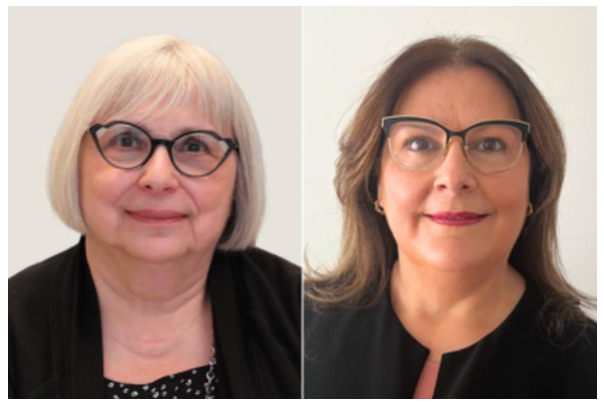
Photo caption: Drs Rosanna Weksberg (left) and Sanaa Choufani
Photo credit: The Hospital for Sick Children