Researchers used epigenetic signatures in circulating nucleosomes to identify early-stage disease and a rare aggressive tumor cell population tied to relapse.
Researchers in Israel have developed a blood test that distinguishes with high accuracy between women with early-stage breast cancer and healthy women. The test also outperforms conventional tissue biopsies in predicting the risk of recurrence after treatment.
The work comes from the laboratories of Guy Ron, a professor at the Hebrew University of Jerusalem, and Efrat Shema, a professor at the Weizmann Institute of Science. It was published in Nature and grew out of a collaboration with physicians at Kaplan Medical Center in Rehovot.
Liquid biopsies identify traces of cancer cells in the bloodstream. Although they are already used to tailor treatment for some patients, they still struggle to detect cancer early in the general population or predict whether the disease will return after treatment. One reason is that, early on, genetic traces of cancer in the blood are extremely scarce and hard to detect without triggering false alarms.
Mapping Epigenetic Signatures in Nucleosomes
The team first mapped the epigenetic signatures of breast tumors. Noa Furth and Christina Riemenschneider of Shema’s lab, along with Yishai Arieli of Ron’s group, recruited 12 women scheduled to have their tumors surgically removed.
Timing was critical. “Once a tumor is removed, there’s only a short window before its epigenetic tags begin to deteriorate,” Furth says in a release. She describes rushing tissue samples from the hospital to the lab on ice and starting analysis the same day.
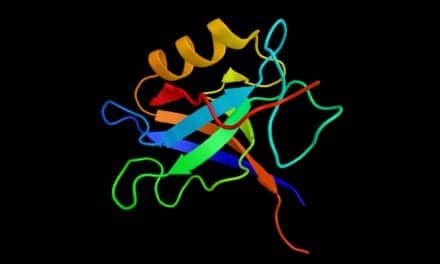
To detect those signatures in blood, the researchers built on a technology developed by Shema. It relies on the fact that dying cells, including cancer cells, release nucleosomes, which are segments of DNA wrapped around proteins, into the bloodstream. The platform uses single-molecule microscopy and fluorescent labels that recognize dozens of different epigenetic tags to map epigenetic changes in millions of nucleosomes. A 2022 study showed promise for detecting colorectal and pancreatic cancers at an early stage with the same approach.
Ron’s physics group then applied computational analysis to find patterns in the data that could help detect cancer and predict its return.
Detection Performance
The scientists tested the method on blood samples from 77 breast cancer patients who had been followed for at least five years at the Mayo Clinic in Florida, along with samples from 30 healthy women. They trained artificial intelligence models to distinguish between the two groups. The models achieved 95% accuracy in detecting early-stage breast cancer, when the tumor was still confined to the breast and measured no more than 2 cm.
Mammography remains a cornerstone of screening, but breast density can limit it. “Regular mammograms reduce the risk of dying from the disease by 22 percent, but the denser the breast tissue, the easier it is for a tumor to ‘hide’ in the image,” Shema says in a release. “Our blood test showed strong diagnostic performance regardless of breast density.”
According to Shema, the test performed equally well across different types of breast cancer. It also held up when the number of patient blood samples was expanded to 188 with the help of Sheba and Kaplan medical centers.
Identifying Aggressive Cells Linked to Recurrence
Even when breast cancer is caught early and treatment appears successful, the disease returns in 20% to 40% of cases. One possible reason is that treatment may eliminate most tumor cells while leaving behind a few capable of causing a relapse.
The researchers found that even breast tumors not considered particularly aggressive can harbor a rare population of highly aggressive, invasive cells with a distinct epigenetic signature. The differences between these cells and their neighbors appear to be mainly epigenetic rather than genetic. “When we grew breast cancer models in the lab starting with nonaggressive cells, an aggressive population always emerged eventually,” Shema says.
When the team looked for this signature in patient blood samples, it found that the more prevalent it was, the greater the risk that the disease would come back.
“Using this signature and additional epigenetic markers, we were able to distinguish with 81% accuracy between patients whose cancer returned during follow-up and those who didn’t experience a recurrence,” Ron says in a release. “The test even flagged a risk of recurrence in patients considered low risk by conventional measures.”
Next Steps
Shema says the methods can be used to track aggressive cell populations in other cancer types. The team is now looking for treatments that could deprive cancer cells of their epigenetic flexibility and potentially prompt cells that have already turned aggressive to adopt less aggressive traits. “In the future, they could help us not only predict recurrence but also search for ways to prevent it,” Shema says in a release.
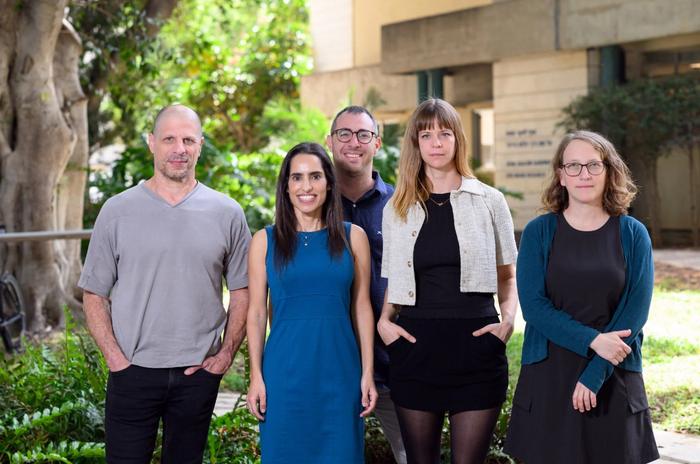
Photo caption: From left to right, Prof Guy Ron, Prof Efrat Shema, Yishai Arieli, Dr Christina Riemenschneider, and Dr Noa Furth of Weizmann Institute of Science.
Photo credit: Ido Eitan