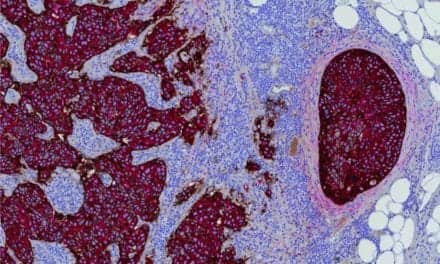

The CDx is the first approved test to identify patients with ESR1-mutated advanced breast cancer who may be eligible for the treatment.
The US Food and Drug Administration (FDA) has approved FoundationOne Liquid CDx as a companion diagnostic for Wilserdly (giredestrant) in combination with everolimus, Foundation Medicine announced. It is the first FDA-approved companion diagnostic to identify patients who may be eligible for the combination and is covered by Medicare for patients with advanced cancer.
Wilserdly is an estrogen receptor antagonist indicated with everolimus for adults with ER-positive, HER2-negative, ESR1-mutated locally advanced or metastatic breast cancer, as detected by an FDA-authorized test. Eligible patients have disease that recurred during or after endocrine-based adjuvant therapy, or progressed on at least one endocrine-based regimen in the metastatic setting.
According to the company, the approval further establishes FoundationOne Liquid CDx as a key liquid biopsy test for advanced breast cancer, giving providers clinically relevant genomic biomarker data from a single test.
“Breast cancer can mutate and become resistant to early treatments, making biomarker testing at recurrence critical,” says Vera Grossmann, interim CEO and chief operating officer at Foundation Medicine, in a release. “FoundationOne Liquid CDx has the sensitivity necessary to detect ESR1, helping identify patients who may benefit the most from Genentech’s next-generation SERD combination therapy.”
ESR1 Mutations and Treatment Resistance
ER-positive, HER2-negative disease accounts for approximately 70% of breast cancer cases. Acquired ESR1 mutations can cause resistance to endocrine therapies, particularly after treatment with cyclin-dependent kinase inhibitors, increasing the risk of disease progression and leading to poor outcomes. In that post–cyclin-dependent kinase inhibitor setting, up to 40% of people with ER-positive, HER2-negative disease have ESR1 mutations.
Jean A. Sachs, MSS, MLSP, CEO at Living Beyond Breast Cancer, noted the burden on patients when treatment stops working.
“Learning their current treatment for metastatic breast cancer is no longer working causes fear and uncertainty for patients and their loved ones,” she says in a release. “Given the prevalence of metastatic breast cancer patients whose cancer acquires an ESR1 mutation, we are excited to see a new therapy option and a high-quality companion diagnostic approved to help identify patients who may be a good fit for this treatment.”
Foundation Medicine now has nine FDA-approved companion diagnostic indications for breast cancer, the most of any genomic profiling company, according to the company. It offers FDA-approved tissue- and liquid-based genomic profiling tests and has more than 100 approved companion diagnostic indications globally.
ID 186108571 © Victor Moussa | Dreamstime.com