
A case report involving a 67-year-old patient with IgM multiple myeloma highlights the diagnostic challenges of differentiating the disease from Waldenström macroglobulinemia.
A case report published in Oncoscience describes a patient with immunoglobulin M (IgM) multiple myeloma whose disease first resembled Waldenström macroglobulinemia. The report shows how bone marrow examination and genetic testing can help laboratorians and clinicians tell the two conditions apart.
Accurate differentiation is “essential, as treatment and prognosis differ substantially,” according to the report.
Similar Blood Findings, Different Diseases
IgM multiple myeloma accounts for about 0.5% of multiple myeloma cases. Like Waldenström macroglobulinemia, it involves abnormal production of IgM antibodies, which makes the two diseases hard to distinguish through blood tests alone. Both can cause elevated IgM levels and increased blood viscosity, but they differ in cellular characteristics, treatment strategies, and prognosis. IgM multiple myeloma primarily affects plasma cells, while Waldenström macroglobulinemia is a form of lymphoplasmacytic lymphoma.
The patient, a 67-year-old man, had persistent headaches, nausea, and shortness of breath. Laboratory testing showed markedly elevated IgM levels, increased blood viscosity, and an abnormal monoclonal protein known as an M-spike.
He lacked several typical features of multiple myeloma, including anemia, elevated calcium levels, kidney dysfunction, and destructive bone lesions. That made diagnosis more challenging because some of his laboratory abnormalities also occur in Waldenström macroglobulinemia.
Bone Marrow and Cytogenetic Clues
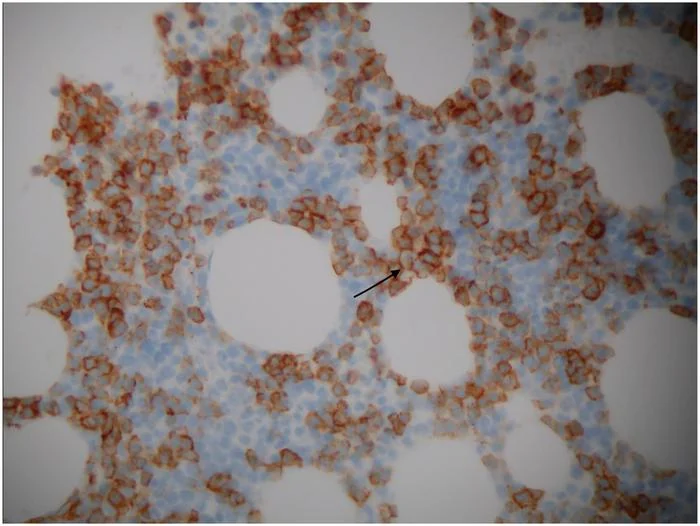
Further workup found that 40% to 50% of the cells in the patient’s bone marrow were plasma cells. Genetic testing identified the t(11;14) chromosomal translocation, which is frequently associated with IgM multiple myeloma but rarely seen in Waldenström macroglobulinemia.
The bone marrow also showed no lymphoid aggregates. Together, these findings led the medical team to diagnose IgM multiple myeloma despite the unusual presentation.
The authors also note that organomegaly and hyperviscosity are not unique to Waldenström macroglobulinemia.
Treatment and Outcome
The patient received eight cycles of chemotherapy with cyclophosphamide, bortezomib, and dexamethasone, followed by an autologous stem cell transplant and lenalidomide maintenance therapy.
Treatment substantially reduced the abnormal monoclonal protein, and follow-up testing showed no detectable M-spike. Bone marrow biopsies one and two years after transplantation found no evidence of myeloma. The authors reported continued remission without recurrence after maintenance therapy was discontinued.
Implications for Diagnostic Workups
The case shows that the absence of classic multiple myeloma features does not necessarily rule out the disease. It also underscores the value of combining laboratory testing, bone marrow examination, and molecular analysis rather than relying on individual clinical findings. That approach may help clinicians identify rare or atypical cases and select treatment suited to the underlying disease, according to the report.
The report describes a single patient, so it cannot establish how often similar diagnostic presentations occur or predict treatment outcomes in other patients.
Photo caption: Bone marrow biopsy demonstrating plasma cell neoplasm. Immunohistochemistry (CD138, DAB chromogen) highlights clusters of neoplastic plasma cells (brown staining).
Photo credit: Lalani and Kalla.