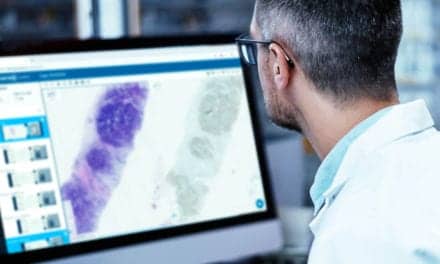

The collaboration will use slide scanning systems to study how digital tools can increase laboratory efficiency and improve patient results.
The Keck School of Medicine of the University of Southern California (USC) and Hamamatsu Corp have launched a collaboration focused on real-world digital pathology workflow improvement. As part of the project, multiple Hamamatsu NanoZoomer slide scanning systems will be installed to support practice-based pathology workflow research.
The research is led by W. Dean Wallace, MD, professor of pathology and laboratory medicine at the Keck School of Medicine of USC. The collaboration aims to address how digital pathology workflows function in high-functioning laboratory environments and how those efficiencies translate into operational improvements for laboratories and patients.
“Through this collaboration, we are bringing that dedication to innovation directly into the laboratory,” says Earl Hergert, president of Hamamatsu Corp, in a release. “We are proud to work with Dr Wallace and the entire USC pathology team to help advance digital pathology in a way that is grounded in real-world experience and focused on improvements that matter both within the laboratory and at the patient level.”
Digital pathology offers opportunities to modernize workflows through high-resolution whole slide imaging, more efficient case review, and improved access to case information across pathology teams, notes a release from Hamamatso Corp. As adoption expands, pathology image data is becoming part of a broader healthcare information environment, requiring integration with other modalities.
“Our goal is to conduct rigorous analysis of digital pathology deployment,” says Wallace in a release. “By evaluating these systems in a real-world setting, we hope to better understand how digital pathology can support workflow improvements, including faster turnaround times for pathology results.”
A central aim of the research is to generate practical insight from one institution’s experience to help inform broader adoption across pathology laboratories. By evaluating how digital workflows function in a real laboratory environment, the USC and Hamamatsu teams aim to understand how operational gains can translate into improvements in healthcare system performance.
“Digital pathology represents an important opportunity to use imaging technology to improve pathology workflow and information integration,” says Scott Blakely, business development manager, whole slide imaging and digital pathology, Hamamatsu Corp, in a release.
The study is intended to generate knowledge that can help shape the future of pathology workflows by shortening the time to case information availability and establishing best practices for integrating pathology image data into the broader spectrum of healthcare. The collaboration aims to inform the development of the next generation of pathology instruments and systems where efficiency and accuracy are foundational to diagnostic and prognostic evaluation.