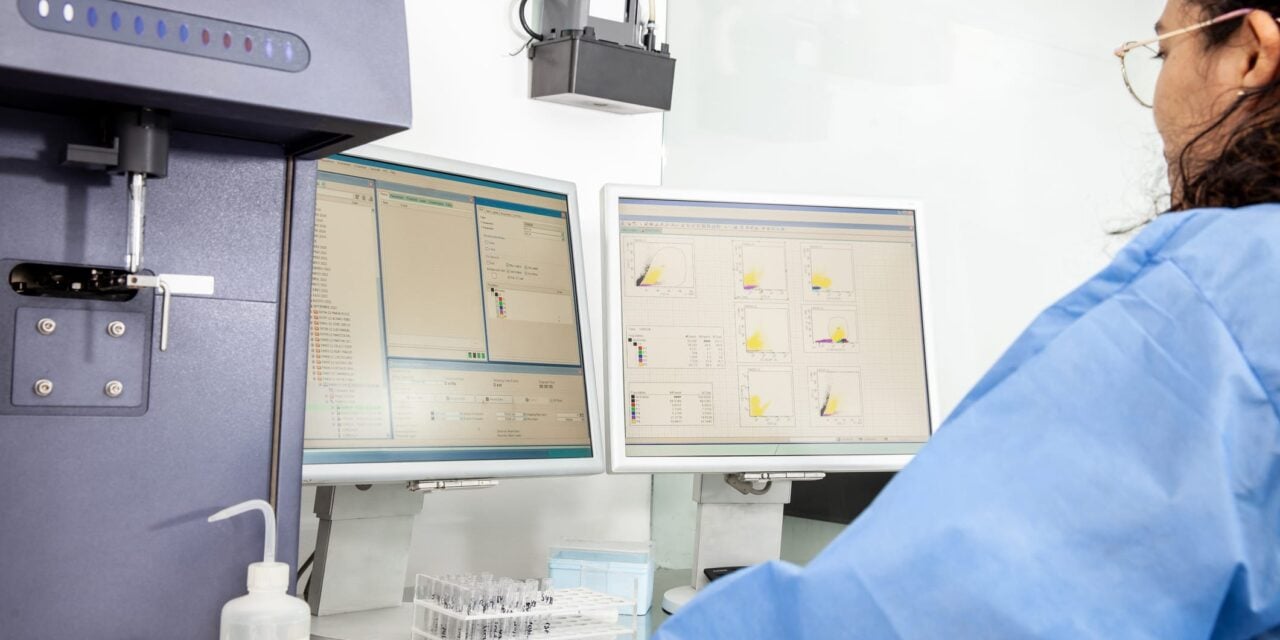
The next-generation flow cytometry assay measured MRD-negative complete response, the primary efficacy endpoint supporting the accelerated approval of ZENBEXUS.
Hematogenix announced that its proprietary next generation flow cytometry assay for multiple myeloma minimal residual disease (MRD) served as the analytical method for the pivotal efficacy endpoint supporting the Food and Drug Administration (FDA) accelerated approval of Bristol Myers Squibb’s ZENBEXUS (iberdomide).
ZENBEXUS is the first CELMoD therapy approved by the FDA for the treatment of multiple myeloma. According to the FDA-approved prescribing information, the trial’s major efficacy outcome measure, MRD-negative complete response, was assessed at a threshold of 10⁻⁵ using the Hematogenix assay.
In the Phase 3 EXCALIBER-RRMM trial, patients treated with ZENBEXUS in combination with daratumumab, hyaluronidase-fihj, and dexamethasone achieved an MRD-negative complete response rate of 41%. This compared with 21% for patients treated with daratumumab, bortezomib, and dexamethasone, representing a statistically significant improvement (p<0.0001) that formed the basis of the FDA approval decision, according to a company release.
“Being named directly in the FDA label for the first approved therapy in a novel drug class is a meaningful validation of the precision and scientific rigor our laboratory brings to this new era of innovative therapies,” says Dr Hytham Al-Masri, president and CEO of Hematogenix, in a release. “Multiple myeloma treatment is moving toward MRD negativity as a defining measure of treatment success, and we are proud that our MM MRD flow cytometry platform is trusted to generate the data that regulators, physicians, and patients relying upon.”
MRD negativity, which is measured at a sensitivity threshold of one residual tumor cell among 100,000 normal cells, is increasingly recognized by regulatory authorities as a surrogate endpoint capable of supporting accelerated approval pathways in multiple myeloma. Hematogenix says its platform is designed to meet the sensitivity, reproducibility, and regulatory-grade standards required for these registrational endpoints across global multicenter trial sites.
ZENBEXUS is indicated for adult patients with multiple myeloma who have received at least one prior line of therapy, including a proteasome inhibitor and an immunomodulatory agent. This indication was approved under the accelerated approval pathway based on MRD-negative complete response at any time, according to the release. Continued approval may be contingent upon verification of clinical benefit in confirmatory trials.