From clot formation to functional and antigen testing, fibrinogen measurement helps laboratories evaluate bleeding disorders, monitor critical illness, and support patient care.
Fibrinogen serves as the building block for fibrin, the structural framework that stabilizes blood clots. Because abnormalities in fibrinogen quantity or function can contribute to bleeding or thrombotic disorders, laboratory testing is essential for evaluating patients and guiding clinical management.
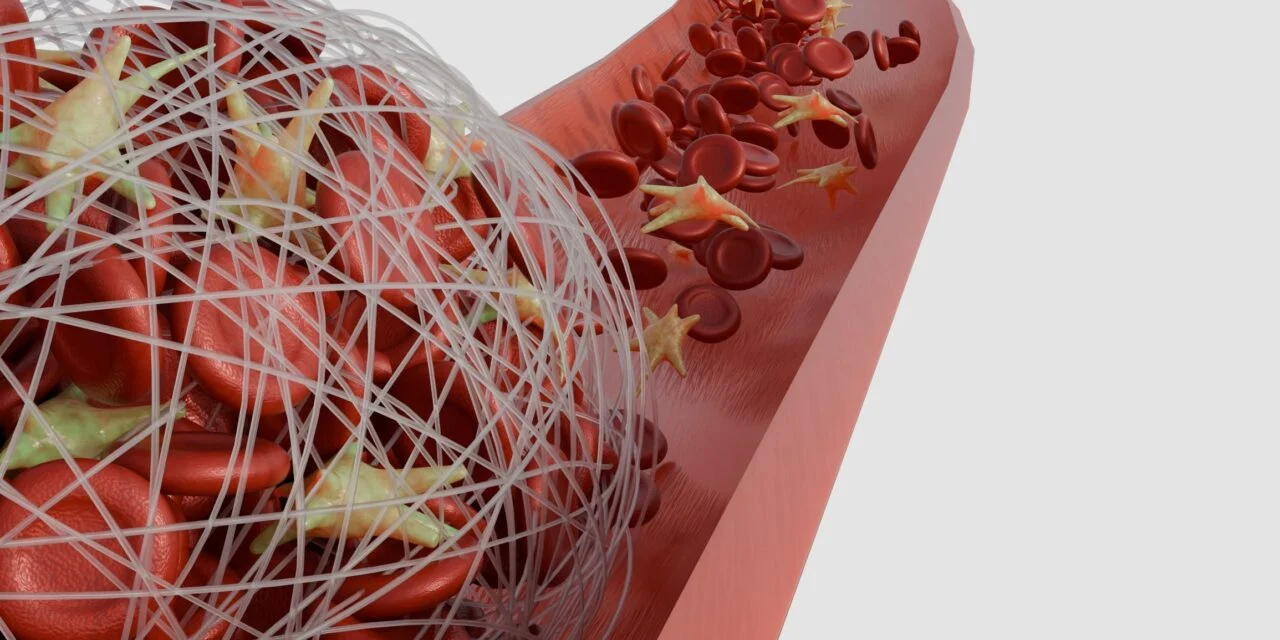
Produced in the liver, fibrinogen circulates in plasma in an inactive, soluble form until vascular injury triggers the coagulation cascade. During clot formation, thrombin converts fibrinogen into fibrin, creating the mesh that reinforces the initial platelet plug and helps stabilize the developing clot.
Fibrinogen’s Role in Clot Formation
When a blood vessel is injured, thrombin removes fibrinopeptides A and B from fibrinogen, exposing binding sites that allow fibrin strands to link together and form an initial fibrin mesh. This network surrounds the platelet plug, providing structural support during the early stages of clot formation.
The newly formed fibrin network is initially unstable. Factor XIII then cross-links the fibrin strands, strengthening the clot and creating a more durable structure. As clot retraction occurs, red blood cells become tightly incorporated into the fibrin network, producing the stable clot needed for wound repair.
Because fibrinogen is also an acute phase reactant, its production increases during inflammation and other physiologic stress. As a result, laboratorians must interpret fibrinogen results within the broader clinical context rather than relying on a single measurement alone.
Clinical Significance of Fibrinogen Testing
Abnormal fibrinogen levels can provide important diagnostic clues.
Low fibrinogen levels may be associated with excessive bruising, prolonged bleeding, or life-threatening hemorrhage. Decreased concentrations can occur in liver disease, where fibrinogen production is reduced, as well as in disseminated intravascular coagulation (DIC), where widespread activation of coagulation consumes clotting factors faster than they can be replaced.
Other causes include dilutional coagulopathy following massive transfusion and inherited fibrinogen disorders such as afibrinogenemia, hypofibrinogenemia, and dysfibrinogenemia. These inherited conditions may present with bleeding, thrombosis, or few clinical symptoms, depending on the specific disorder.
Elevated fibrinogen levels present a different diagnostic challenge. Because fibrinogen functions as an acute phase reactant, increased concentrations are commonly seen during inflammation, infection, pregnancy, obesity, and chronic disease. Clinical context is therefore essential when interpreting elevated results.
Measuring Fibrinogen in the Clinical Laboratory
Clinical laboratories use several testing methods to evaluate fibrinogen. Each provides different information about the protein’s concentration or function.
The Clauss functional assay measures fibrinogen activity by determining clotting time after a high concentration of thrombin is added to diluted patient plasma. The resulting clotting time is compared with a calibration curve to determine functional fibrinogen levels. Because the sample is diluted, the assay minimizes interference from substances such as heparin, direct oral anticoagulants, and elevated fibrin degradation products, allowing accurate measurement across a broad range of fibrinogen concentrations.
Fibrinogen antigen testing measures the amount of fibrinogen present rather than its function. This immunoturbidimetric method uses antibodies attached to latex particles that bind to fibrinogen in the patient sample. The resulting agglutination produces a change in absorbance proportional to the fibrinogen concentration.
In trauma and surgical settings, laboratories may also use viscoelastic testing, including thromboelastography and rotational thromboelastometry. These whole-blood, point-of-care methods evaluate clot formation in real time, including fibrinogen’s contribution to overall clot strength, providing rapid information that can support clinical decision-making during active bleeding.
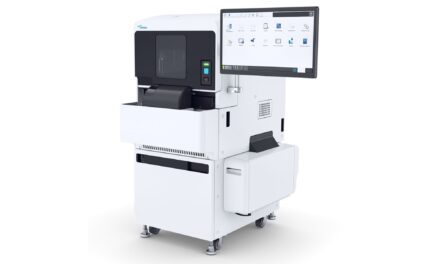
Fibrinogen quantification on Sysmex hemostasis analyzer is performed using the Clauss fibrinogen method where Dade® Thrombin is added to diluted patient plasma, converting fibrinogen to fibrin. Clot detection is measured optically using simultaneous multiwavelength detection reading at 340, 405, 575, 660 and 800 nm with fibrinogen concentration derived from the clotting curve.
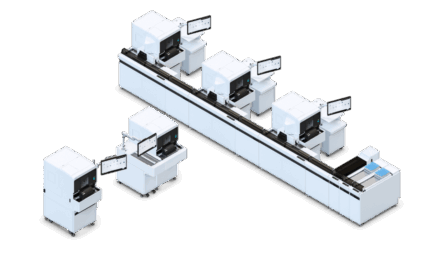
The CN-Series™ Automated Blood Coagulation Analyzers are capable of reading clotting, chromogenic or immunoturbidimetric assays at any of the detector channels. This flexible architecture eliminates methodological bottlenecking when fibrinogen is run concurrently with other test types.
Preanalytical sample integrity (PSI™) checks are performed automatically prior to fibrinogen analysis. The system performs a comprehensive tube fill check, multi-clog detection and flagging for optical interference, reducing the risk of erroneous results from compromised specimens without requiring manual inspection.
Supporting Clinical Decision-Making
Fibrinogen testing provides more than a single laboratory value. By helping distinguish between reduced fibrinogen quantity and impaired fibrinogen function, these assays support the evaluation of inherited bleeding disorders, liver disease, DIC, trauma, and other conditions affecting coagulation.
Whether confirming a suspected deficiency, assessing clot formation during surgery, or monitoring critically ill patients, fibrinogen testing remains an important component of modern hemostasis laboratories and supports informed clinical decision-making.
ID 406152591 © LoveEmployee | Dreamstime.com
Sponsored by

Medqor is committed to protecting and respecting your privacy. We may contact you about our products and services or share information with sponsorship partners, as well as other content that may be of interest to you. By submitting your information, you consent to us contacting you for this purpose in accordance with our privacy policy.
For further information, please check out our privacy policy here.