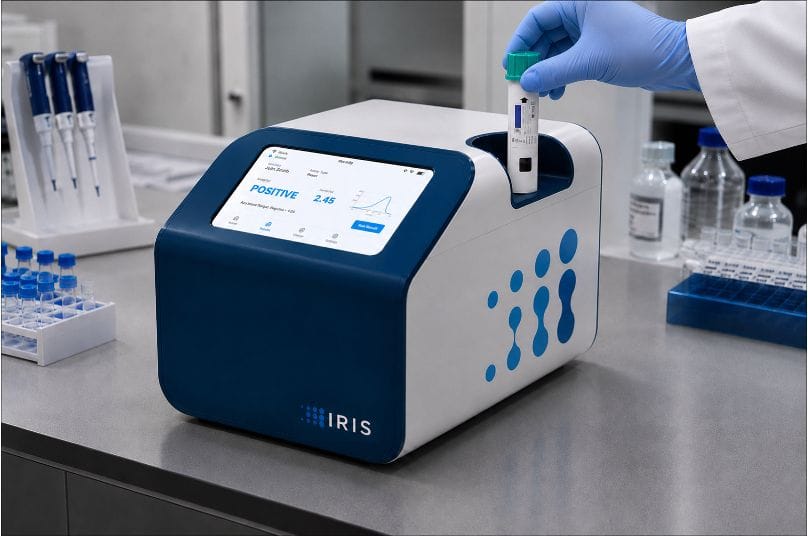
The IRIS TX-100 uses cartridge-based technology to measure up to 100 biomarkers in approximately 10 minutes.
IRIS Kinetics announced the IRIS TX-100, a point-of-care diagnostic platform that brings the company’s multiplex, label-free binding kinetics technology out of the research lab and into clinical settings. The company unveiled the system at the Association for Diagnostics & Laboratory Medicine 2026 meeting in Anaheim, California.
The platform uses IRIS chip technology, which is also utilized in the company’s research-focused MX-200 platform. For clinical applications, the technology is packaged into a single-use cartridge the size of a vacutainer tube. The system requires a 25 microliter drop of blood, and the analyzer provides results in approximately 10 minutes. According to the company, the test can measure between 4 and more than 100 biomarkers in real time.
“With TX-100, the same chip and kinetic measurement science that researchers already trust on our MX platform now fits into a format built for the clinic,” says Farhad Khosravi, IRIS Kinetics, in a release. “This is central-lab depth of information delivered at rapid-test speed, right where care happens.”
Clinical Applications in Critical Care
The TX-100 is designed to capture both kinetic and endpoint binding data in real time. This allows the system to translate biomarker patterns into an actionable phenotype at the bedside without requiring a central laboratory or the associated turnaround time, according to IRIS Kinetics.
The first targeted application for the platform is critical-care phenotyping for acute respiratory distress syndrome. By identifying the inflammatory phenotype of a patient in minutes rather than hours, the system is designed to help clinicians match treatment to the underlying biology of the condition. The company plans to expand the platform to include panels for sepsis, cardiac, and neuro applications.
Technology Integration
The new diagnostic platform complements the existing MX-200 multiplex biosensor, which remains focused on research and development and research-use-only applications. Together, the two systems reflect a strategy to apply core kinetics technology across both research and clinical markets, according to the company.
The IRIS TX-100 is currently in development and is not available for sale, nor is it intended for use in diagnostic procedures at this time.
Photo caption: IRIS TX-100
Photo credit: IRIS Kinetics