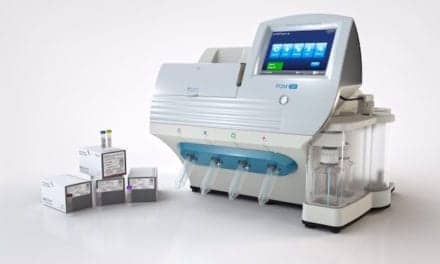
The decision allows patients with late-stage solid tumors to access ultrasensitive minimal residual disease testing to track treatment response.
Personalis Inc announced that the Centers for Medicare & Medicaid Services (CMS) Molecular Diagnostic Services Program has expanded coverage for the company’s NeXT Personal minimal residual disease (MRD) test. The expansion now includes immunotherapy monitoring for patients with late-stage solid tumors.
The coverage determination is supported by clinical evidence generated in collaboration with the Vall d’Hebron Institute of Oncology (VHIO). A recently published study demonstrated that the test’s sensitivity allows for the evaluation of treatment response and the prediction of clinical outcomes in patients undergoing immunotherapy. By tracking tumor dynamics, the assay can identify molecular responders and non-responders ahead of traditional radiologic imaging.
Immunotherapy is used by several hundred thousand patients in the US per year, though treatment response remains variable. Identifying which patients are responding is necessary for optimizing therapeutic pathways, minimizing unnecessary toxicity, and managing the costs associated with these therapies.
“Securing Medicare coverage for immunotherapy monitoring across solid tumors is a win for the patients we serve and the fight against cancer,” says Chris Hall, CEO of Personalis, in a release. “This decision validates our strategy of moving NeXT Personal into the heart of active treatment management. For the first time, Medicare patients on immunotherapy will have an ultrasensitive MRD test to help their doctors see if a treatment is working in real-time.”
The test utilizes whole-genome sequencing and noise-suppression technology to achieve sensitivity down to 1 part per million. By tracking approximately 1,800 patient-specific mutations, the assay provides a high-resolution view of a patient’s unique tumor profile.
In the immunotherapy setting, inflammatory responses can often complicate the interpretation of traditional scans, a phenomenon known as pseudoprogression. According to the company, the assay provides a clear molecular signal of true disease burden in these instances.
“The VHIO data shows that immunotherapy monitoring with a highly sensitive, quantitative test like NeXT Personal can help physicians and patients understand treatment response with more precision, including situations where imaging results can be ambiguous,” says Richard Chen, president and chief medical officer at Personalis, in a release. “This coverage gives physicians another tool for proactively managing immunotherapy.”