
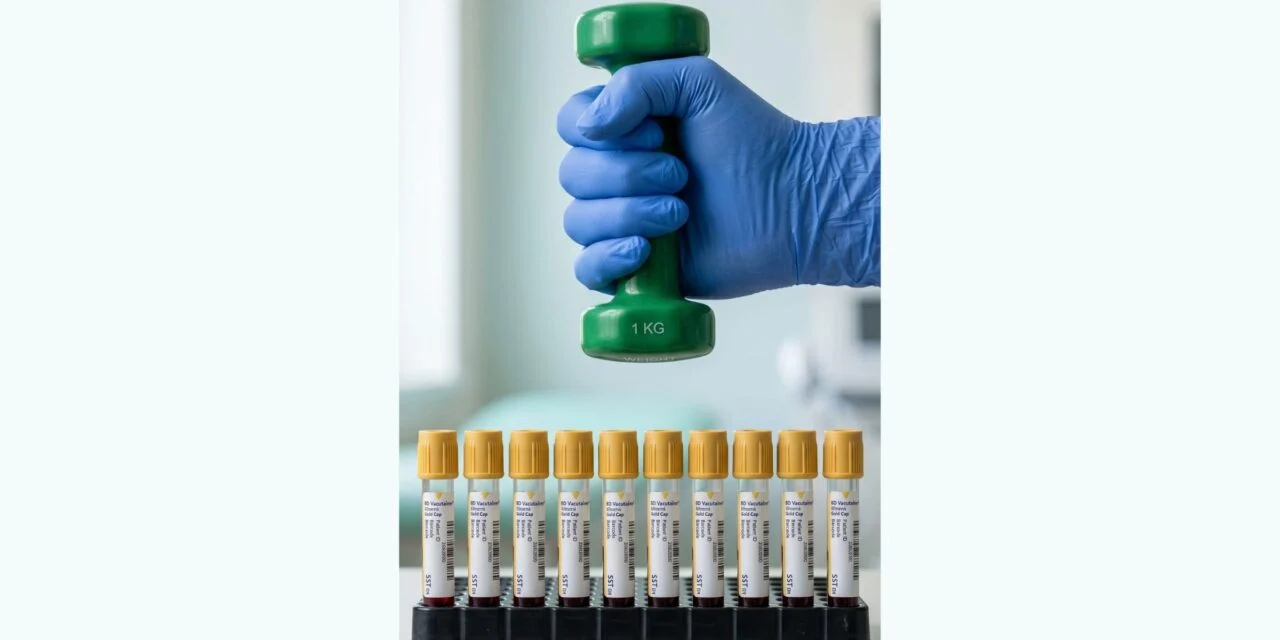
Research suggests new sequencing technologies can help labs move from tissue-level averages to cell-specific testing for precision exercise medicine.
Researchers from the Shanghai Jiao Tong University Journal Center are proposing a new roadmap for exercise medicine that uses single-cell sequencing to identify cell-type-specific biomarkers.
The commentary, published in LabMed Discovery, explains how single-cell sequencing and multi-omic technologies can resolve biological responses in skeletal muscle, circulating immune cells, vascular cells, and adipose tissue. This approach allows researchers to identify which specific cells respond to different exercise doses and why individual biological responses vary, according to the Shanghai Jiao Tong University Journal Center.
The paper highlights applications in muscle repair, immune regulation, aging-related cellular states, and chronic disease research. It also proposes a translational pathway in which single-cell discoveries are converted into measurable biomarkers.
These candidate markers would then be validated using accessible laboratory assays, including flow cytometry, targeted ribonucleic acid (RNA) panels, proteomics, methylation assays, and clinical chemistry.
Future studies should integrate precise exercise protocols, repeated sampling, spatial context, and physiological outcomes to support precision exercise medicine, says the Shanghai Jiao Tong University Journal Center in a release.
The researchers note that moving beyond tissue-level averages toward cell-type-specific biomarkers is necessary to understand how cellular states change over time and why individuals show different biological responses to training. Independent validation remains a key requirement for the development of these precision exercise biomarkers, according to the report.