Despite effective prevention tools, Millennials are delaying screening. New approaches may help remove barriers to participation.
By Carolyn Kay, MD, OB/GYN, Roche Diagnostics
Cervical cancer is one of the few cancers that the world has the tools to eliminate. According to the World Health Organization and the US Centers for Disease Control and Prevention, vaccination, regular screening, and access to timely treatment make prevention possible for nearly every case. Yet participation in preventive care remains uneven—and in some places, it’s declining.
New research commissioned by Roche Diagnostics across six European countries found that Millennials (ages 29–42) are the generation most likely to delay or skip cervical cancer screenings, with nearly 1 in 3 respondents reporting they had postponed or missed a screening appointment. Although the data comes from Europe, similar patterns are visible in the United States. A national survey from Aflac found that 9 in 10 Americans have put off health checkups or screenings that could help save their lives. Additional US data from the National Cancer Institute show rising rates of overdue cervical cancer screening, while analyses in JAMA report continued declines in preventive care following the COVID-19 pandemic.
These findings underscore a simple but urgent truth: Access alone doesn’t guarantee participation. Understanding why preventive care is being postponed—and what can be done to reverse that trend—must be a shared priority.
What the Research Reveals About Generational Health Behavior
Generational research from the American Psychological Association’s Stress in America 2023 report shows that younger adults—including Millennials—report higher levels of stress and mental-health strain. Surveys from Pew Research Center also show that Millennials express lower trust in institutions compared with older generations. These dynamics can make routine screenings feel optional rather than essential.
As a Millennial myself, I understand how these factors play out in everyday life. Our generation came of age during a shift toward hyper-convenience—where nearly everything, from shopping to scheduling, can be done instantly or delivered to our doorstep. When something doesn’t fit seamlessly into that rhythm, it’s easy for it to fall off the radar. Preventive health appointments are no exception. To improve participation, we need to reimagine cervical cancer screening in that same spirit: making it more user-friendly, easier to access, and simpler to act on so that healthier choices become the path of least resistance.
There are also generational characteristics that help explain the trend we are seeing. Millennials are digital natives and early adopters of technology. We are multitaskers juggling full, demanding lives—often balancing careers, caregiving responsibilities, financial pressures, and social expectations simultaneously. Convenience strongly influences our decision-making, and when an option is not intuitive, streamlined, or digitally supported, it can easily be postponed.
At the same time, research from the Pew Research Center, the Association of American Medical Colleges, and the Kaiser Family Foundation shows that some Millennials report skepticism or ambivalence toward traditional healthcare systems—reflecting broader patterns of lower institutional trust and less consistent engagement with primary care compared with older adults. Together, these traits help illuminate why cervical cancer screening rates are lagging within this generation.
Many younger adults report emotional barriers—including fear, embarrassment, or anxiety about results—as well as logistical barriers tied to work and family responsibilities or lack of schedule flexibility. Nearly half of the survey respondents said they had never discussed cervical screening with anyone, highlighting persistent stigma and silence surrounding the topic.
In the US, cervical cancer screening is considered a preventive service, and for most individuals with health insurance, it is covered without additional out-of-pocket costs beyond their regular premiums under Affordable Care Act preventive care provisions. Yet despite minimal financial barriers, screening still gets deprioritized—especially among younger adults.
To move the needle, the healthcare community must meet Millennials where they are: through flexible scheduling, digital engagement, community-centered communication, and screening options that reflect the realities of modern life.
How Self-Collection for HPV Testing Can Help Close the Screening Gap
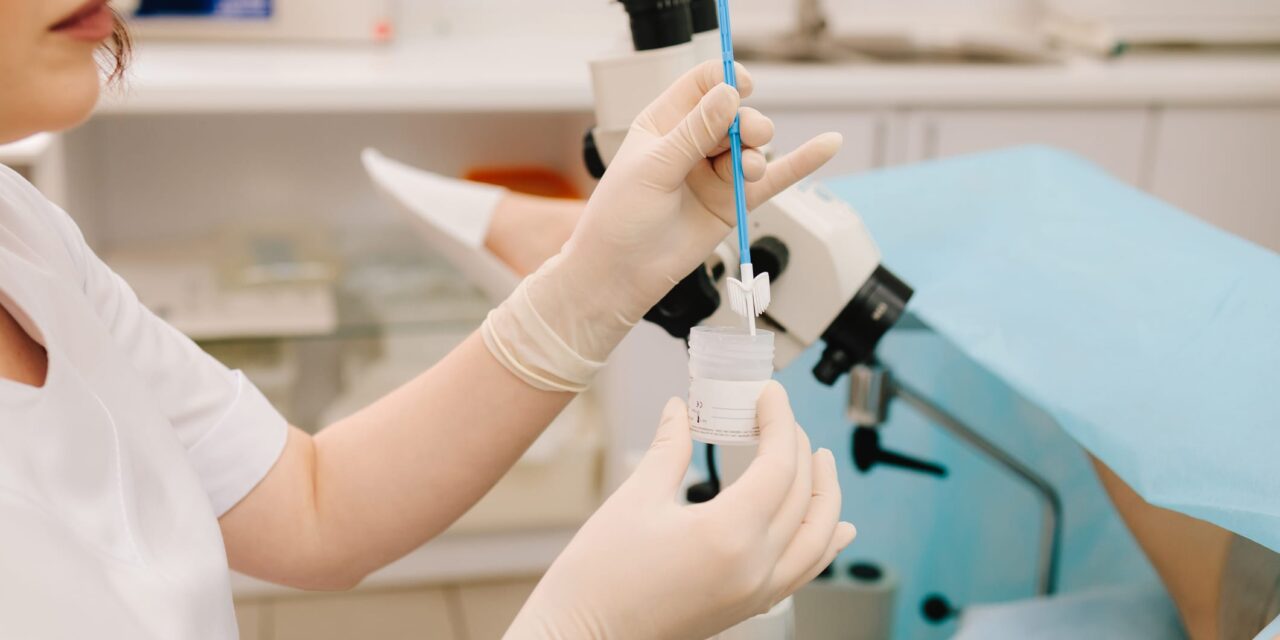
Expanding screening options can help overcome emotional and logistical barriers. Self-collection for HPV testing allows an individual to privately collect their own vaginal sample in a healthcare setting, which is then analyzed in a laboratory using validated molecular methods, as described by the US Food and Drug Administration (FDA).
This approach preserves accuracy while providing a greater sense of control and privacy. A comprehensive meta-analysis published in The Lancet Oncology and guidance from the World Health Organization show that PCR-based HPV testing on self-collected samples provides sensitivity comparable to clinician-collected specimens. For many patients, having the option to self-collect in a trusted environment can make screening more accessible.
In 2024, the FDA approved HPV self-collection for use in healthcare settings, expanding access for individuals who may otherwise delay screening. Most recently, in late 2025, the American Cancer Society updated its cervical cancer screening guidelines to include self-collection as an acceptable option, underscoring its growing role in reaching individuals who are not participating in traditional screening. When incorporated into existing programs, self-collection complements clinician-led testing and offers a pathway to reach individuals who delay, skip, or avoid cervical screening due to fear, embarrassment, time constraints, or competing responsibilities.
By leveraging validated innovations, laboratorians, clinicians, and public-health professionals can improve screening participation without compromising quality.
What Collective Action Is Needed to Reach the WHO Cervical Cancer Elimination Goal for 2030
The World Health Organization’s Global Strategy outlines its “90-70-90” targets to eliminate cervical cancer as a public-health problem by 2030 (WHO Global Strategy, 2020):
- 90% of girls fully vaccinated with the HPV vaccine by age 15,
- 70% of women screened with a high-performance test by age 35 and again at age 45, both, and
- 90% of women identified with cervical disease receive treatment.
Each target is interdependent. Prevention through vaccination and early detection is foundational, but linking individuals with abnormal results to timely treatment is equally critical. The primary goal of screening is to identify individuals at risk for cervical cancer by detecting precancerous changes caused by persistent HPV infection—changes that can be treated effectively to prevent progression to invasive disease. And when cancers are found, earlier-stage diagnosis is associated with markedly better outcomes, according to the American Cancer Society.
Achieving these goals requires collective action across the entire health ecosystem, including public-health agencies, healthcare systems, laboratories, employers, policymakers, and community partners. Innovations such as HPV primary screening and expanded access through self-collection, paired with sustained education, awareness, and advocacy, create the conditions that accelerate progress.
A Shared Opportunity to Make Cervical Cancer a Disease of the Past
Progress depends on both scientific innovation and human engagement—and critically, access to that innovation. Eliminating cervical cancer will require technologies that enable earlier, easier detection, paired with communication and system-wide support that help individuals feel informed, empowered, and able to act. I once heard it said that “innovation without access is privilege disguised as progress,” and that idea resonates deeply in this context.
If we continue to combine innovation with access, pair prevention with consistent follow-through to treatment when indicated, and adapt public health interventions to the context of the communities we serve, we can make cervical cancer a disease of the past. But that future depends on addressing the realities facing Millennials today. We must intentionally design screening approaches that meet this generation where they are—convenient, flexible, and aligned with modern life—so that screening becomes an achievable priority rather than an afterthought.
About the author: Kay is an OB/GYN and medical director with Roche Diagnostics.
References
- Aflac. (2025). “9 in 10 Americans Have Put Off Health Checkups and Screenings That Could Help Save Their Lives.”
- American Cancer Society. (2024). Survival Rates for Cervical Cancer.
- American Cancer Society. (2025). New Cervical Cancer Screening Guideline Aims to Improve Accessibility.
- Arbyn, M., et al. (2018). “Detection of high-risk HPV with self-collected versus clinician-collected samples using PCR-based testing.” The Lancet Oncology.
- CDC. (2024). “Cancers Caused by HPV.”
- FDA. (2024). “FDA Clears First HPV Self-Collection Option in Healthcare Settings.”
- GWI–Roche. (2025). “Cervical Cancer Europe Study.”
- HHS. “Affordable Care Act Preventive Services Coverage.”
- National Cancer Institute (NCI). (2022). “Overdue Cervical Cancer Screening Increasing Among U.S. Women.”
- JAMA. (2024).” Changes in Prevention Care and Cancer Screening Rates in the Post-COVID-19 Period.”
- WHO. (2024). Cervical Cancer Factsheet.
- WHO. (2021). HPV Screening Guidelines.
- WHO. (2020). Global Strategy to Accelerate the Elimination of Cervical Cancer.
ID 410729233 © Anatolii Rabizo | Dreamstime.com