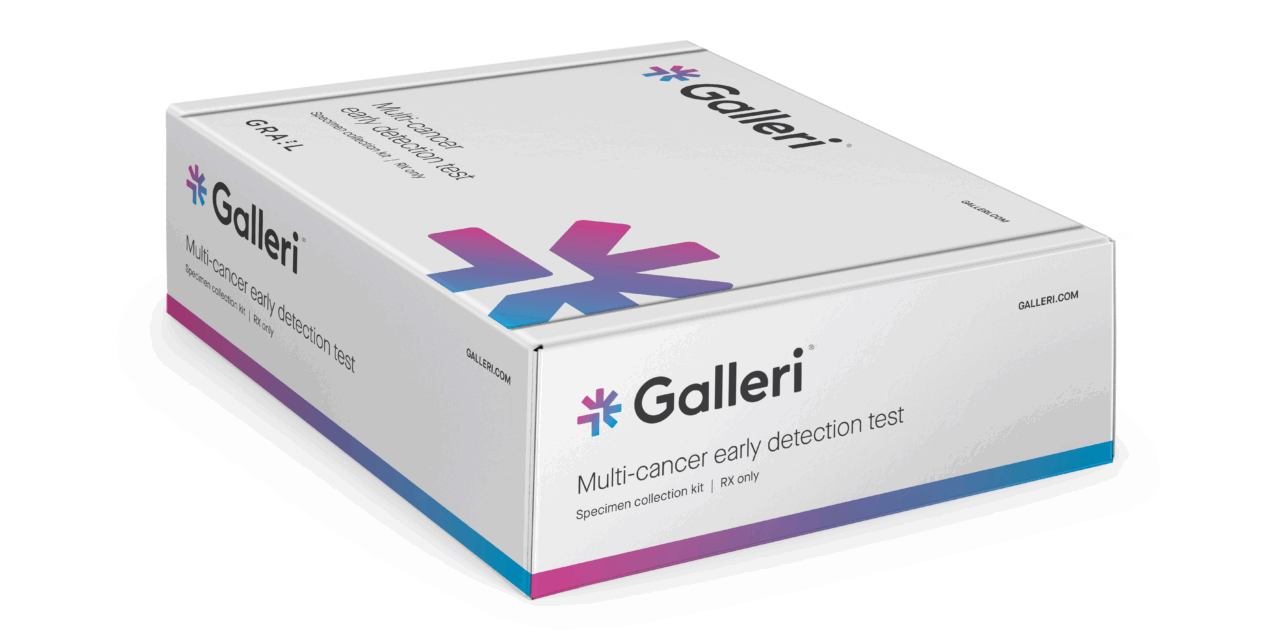
The PMA submission is based on test performance and safety results from 25,490 participants in the US-based PATHFINDER 2 study, with one year of follow-up, and from the prevalent screening round of the NHS-Galleri trial.
GRAIL Inc has submitted the final module of its premarket approval application to the US Food and Drug Administration (FDA) for the Galleri multi-cancer early detection test.
The submission includes data from 25,490 participants in the US-based PATHFINDER 2 study and results from the NHS-Galleri trial, which enrolled more than 140,000 asymptomatic participants aged 50 to 77 in England. The FDA designated Galleri as a breakthrough device in 2018.
“Cancer is now the leading killer of adults over 50 years old in the US, and most deadly cancers are often discovered too late, when they are difficult to treat and typically have worse outcomes,” says Josh Ofman, MD, MSHS, president at GRAIL, in a release. “… Adding Galleri to standard-of-care single cancer screening tests has the potential to dramatically improve the performance of the nation’s current screening program and expand opportunities for earlier treatment and improved outcomes.”
Clinical Trial Data Supporting Submission
The PMA application draws on safety and performance data from two major studies. PATHFINDER 2, a prospective interventional study, evaluated the test’s safety and performance in approximately 35,000 individuals aged 50 and older who were eligible for guideline-recommended cancer screening.
The study’s primary objectives included evaluating safety based on diagnostic evaluations performed in participants with positive test results and assessing performance measures including positive predictive value, negative predictive value, sensitivity, specificity, and cancer signal origin prediction accuracy.
The NHS-Galleri trial represents the only prospective, randomized, controlled trial to assess clinical utility and performance of a multi-cancer early detection test for population screening when added to standard care, according to a release from GRAIL. Participants provided three blood samples over two years, approximately 12 months apart.
The trial’s primary objective is to demonstrate a reduction in late-stage cancers in people who received the Galleri test compared with those who did not, focusing on a pre-specified group of 12 cancer types that represent approximately two-thirds of cancer deaths in England and the United States.
Technology and Market Position
The Galleri test uses targeted methylation-based technology to detect multiple cancer types through blood analysis. GRAIL’s platform is designed to support various applications across the cancer care continuum, including multi-cancer early detection in symptomatic patients, risk stratification, minimal residual disease detection, biomarker subtyping, and treatment and recurrence monitoring.
The submission also includes a bridging analysis comparing the performance of Galleri versions used in the clinical trials to the updated version submitted for FDA approval.
Secondary objectives from the NHS-Galleri trial include measuring stage IV cancer reduction, test performance metrics including positive predictive value and false positive rates, cancer detection rates, safety profiles, and healthcare resource utilization.
Photo caption: Galleri test
Photo credit: GRAIL