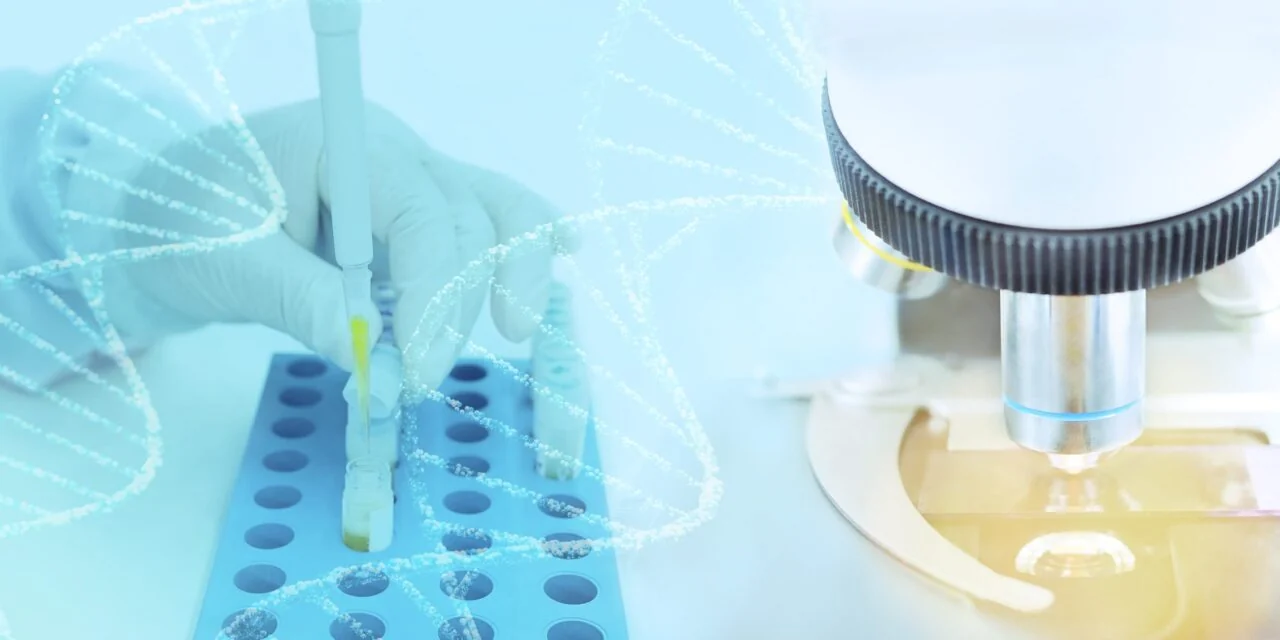
The ultrasensitive workflow analyzes both strands of a DNA molecule to detect trace levels of circulating tumor DNA in plasma.
Illumina announced an early access program for an ultrasensitive sequencing workflow that expands its molecular residual disease (MRD) research portfolio. The workflow is designed to detect trace amounts of circulating tumor DNA (ctDNA) in plasma samples.
The workflow uses duplex chemistry, which analyzes both strands of a DNA molecule to increase confidence in detection. It combines advances from the NovaSeq X sequencing platform and DRAGEN bioinformatics software to support longitudinal, whole-genome studies of MRD. The workflow is for research use only.
“Researchers need effective ways to find the faintest traces of tumor DNA—signals that can be especially difficult to detect in early-stage, low-shedding, or low-mutation-burden tumors,” says Cande Rogert, vice president and global head of advanced science at Illumina, in a release. “This early access technology is an important step toward helping researchers explore those challenging settings with greater sensitivity and generate evidence that can advance MRD research.”
Performance and Workflow Details
According to Illumina, the workflow supports 5 ng to 10 ng of cell-free DNA input and pairs NovaSeq X sequencing with duplex chemistry to deliver quality scores above Q65. In representative studies, the workflow demonstrated reproducible detection of ctDNA at 2.5 parts per million (ppm) levels with a low sample input of 10 ng.
Detection at low single-digit ppm levels means identifying only a few ctDNA fragments among 1 million total DNA fragments.
Duplex sequencing confirms each base call using both complementary strands of the original DNA molecule. Observing the same change on both strands increases confidence that the finding is biological rather than an error introduced during library preparation or sequencing.
On the software side, DRAGEN generates duplex consensus reads, optimizes quality scores, and interrogates thousands of tumor-specific variants across the genome. It then combines evidence from the few variants that may be present in plasma.
Fit Within Illumina’s MRD Portfolio
The technology adds an ultra-accurate option for ctDNA monitoring when greater sensitivity is needed. It complements Illumina WGS Oncology Prep, which supports both tumor fingerprinting and longitudinal ctDNA monitoring in a standardized whole-genome workflow. That product was announced earlier this year and is also available through early access.
Illumina says its whole-genome sequencing-based MRD research workflows, unlike approaches that require a custom-built panel for each sample, use a standardized process from library preparation through DRAGEN analysis. The company says this helps simplify laboratory operations and delivers a turnaround time of less than five days.
NYU Langone Health is an early access user of the new technology and is applying it to MRD research.
“MRD research is moving fast, and new tools are making it possible to bring ultrasensitive, tumor-informed analysis in-house,” says Matija Snuderl, MD, director of molecular pathology at NYU Langone Health, in a release. “We are excited to be part of the early access program and look forward to generating evidence with a non-bespoke approach that can help advance our understanding of disease recurrence.”
Kits for the early access program are expected to ship in the first quarter of 2027.