Roche Launches Test for differential Diagnosis of Mesothelioma
The automated immunohistochemistry test helps pathologists identify malignant mesothelioma while preserving biopsy tissue for additional testing.

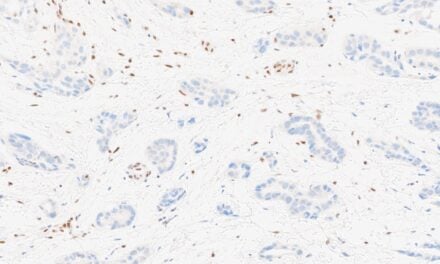
The automated immunohistochemistry test helps pathologists identify malignant mesothelioma while preserving biopsy tissue for additional testing.

Tel Aviv University researchers have developed a low-cost blood test that detects lung cancer by analyzing optical DNA fingerprints, achieving 93.1% sensitivity and 90.3% specificity.






New clinical utility data showed that offering a blood-based lung cancer test increased screening participation compared with low-dose CT screening alone.



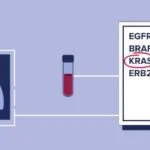


A novel enrichment method produces virtually pure circulating tumor DNA from blood samples, showing strong sensitivity and specificity across colorectal and lung cancer patients.
Read More
Preoperative blood testing using H3K27Me3-nucleosome levels may help clinicians identify which non-small cell lung cancer patients need closer follow-up or additional treatment.
Read More
A pooled analysis of more than 1,100 patients across four cohort studies supports the clinical utility of the Nodify CDT test in identifying high-risk lung nodules.
Read More
The NeXT Personal molecular residual disease test can now be used for surveillance of patients with Stage I to III non-small cell lung cancer.
Read More
Researchers at Mass General Brigham have developed a blood test that predicts tarlatamab response in small cell lung cancer, showing 85% sensitivity and 100% specificity.
Read More
A study of 431 patients demonstrates the test can detect cancer recurrence months ahead of standard imaging.
Read More
The Mercy Halo test demonstrates performance similar to low-dose CT screening with the potential to reach underscreened populations.
Read More
University of Texas at Dallas researchers combine electrochemical biosensors with AI to identify volatile organic compounds linked to thoracic cancers.
Read More
The permit enables the company to offer its PROphetNSCLC test to physicians and patients across New York State, completing nationwide availability.
Read More
A new blood-based test that combines four protein markers with artificial intelligence has demonstrated potential for early lung cancer detection in a multicenter retrospective study.
Read More
On World Lung Day, Reveal Dx board member Mat Brevard discusses why current diagnostic tools fall short—and how new approaches could improve accuracy and outcomes.
Read More
The 2,400-patient study evaluates the Percepta Nasal Swab test’s ability to guide management decisions for patients with lung nodules.
Read More
Haystack Oncology and Rutgers Cancer Institute collaborate on phase II trial examining minimal residual disease testing in stage II/III NSCLC patients.
Read More
Study of 177 patients with limited-stage small cell lung cancer demonstrates ctDNA’s potential to personalize consolidation immunotherapy decisions.
Read More
The test demonstrated higher baseline sensitivity for ctDNA detection compared to gene mutation-based testing in AstraZeneca’s NeoADAURA study.
Read More