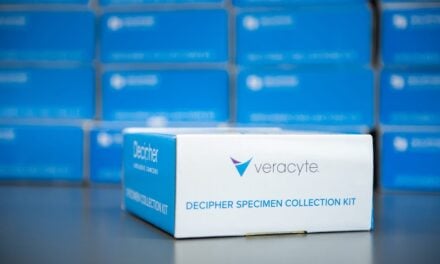

Study findings show tissue-based molecular test scores correlate with distant metastasis and mortality risk, offering a tool to guide treatment intensification.
Veracyte’s Decipher tissue-based molecular test can help identify which patients with high-risk, localized prostate cancer will benefit from adding the hormonal therapy abiraterone to their standard care, according to findings from researchers at University College London (UCL).
The findings, scheduled for presentation at the European Society for Medical Oncology Congress 2026 in Madrid, examine how genomic testing can resolve a persistent clinical dilemma: balancing the survival benefits of intensified treatment against adverse effects such as fatigue and diminished quality of life.
Predictive Value Across Trial and Real-World Cohorts
The UCL team evaluated Decipher scores across two distinct patient populations: a real-world dataset of 27,607 men (with 5,956 evaluated for outcomes) and a trial cohort of 401 men with non-metastatic prostate cancer randomized within the STAMPEDE clinical trial.
In their analysis, higher test scores consistently correlated with poorer clinical trajectories. For every 0.1-unit increase in the genomic score, the risk of distant metastasis rose with an adjusted hazard ratio of 1.49, and the risk of prostate cancer mortality increased with a hazard ratio of 1.38.
Critically, the Decipher score predicted which men whose cancer had not spread to the lymph nodes gained a protective benefit from abiraterone in halting metastatic spread.
“For men with very high-risk prostate cancer, preventing the cancer from spreading is critical, and understanding who benefits most from additional treatment can make a meaningful difference,” says Sarah Howlett, lead researcher at the UCL Cancer Institute, in a release. “Our findings suggest that a genomic test could help personalise treatment: men with high-risk disease but a low Decipher score have low rates of cancer spread and could potentially be spared more intensive treatment, while men with a high score could be prioritised for it.”
Howlett noted that while reproducing consistent patterns in both a randomized trial and a large real-world cohort provides strong evidence, further validation across independent datasets remains necessary before routine adoption for these therapeutic decisions.
Refining Treatment Pathways
The standard treatment pathway for prostate cancer in the UK has centered on androgen deprivation therapy. While evidence from the STAMPEDE trial established that adding abiraterone could halve the risk of death and slow disease progression in high-risk localized cases, clinical responses across broader studies have varied.
The expanding clinical utility of the test aims to provide laboratories and oncologists with objective genomic data before prescribing secondary hormonal therapies.
“We believe this growing evidence gives physicians a stronger reason to use Decipher before making decisions that can affect both cancer outcomes and patients’ quality of life,” says Elai Davicioni, medical director, urology for US cancer diagnostics firm Veracyte, in a release. “These findings expand Decipher’s predictive evidence to another consequential treatment decision: whether adding abiraterone will provide meaningful benefit for a man with very high-risk prostate cancer.”
ID 47343543 © Bialasiewicz | Dreamstime.com