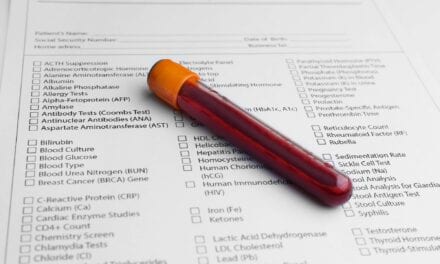
The system uses routine blood draws to provide results in 17 minutes, offering an alternative to invasive diagnostic methods.
Sysmex Europe SE has announced the availability of the HISCL automated immunoassay system for Alzheimer’s disease blood biomarker testing, providing a non-invasive alternative to traditional diagnostic pathways.
The platform is designed to offer a fast and automated option compared to traditional cerebrospinal fluid (CSF) and positron emission tomography (PET) imaging. According to a company release, the HISCL system is now available for laboratory use with a CE-marked Aβ42/40 ratio assay and a p-Tau217 assay available for research use only.
The findings, which were recently presented at the Clinical Trials on Alzheimer’s Disease and the ADPD Alzheimer’s and Parkinson’s Disease Conference, demonstrate analytical and diagnostic performance across sensitivity and specificity using standard venous blood samples.
Addressing the Diagnostic Gap
According to the company, more than 90% of patients with mild cognitive impairment remain undiagnosed or misdiagnosed in primary care. Patients frequently present late in the disease course after opportunities for early intervention have closed. While lumbar punctures are resource-intensive and PET imaging is expensive, blood biomarkers are recognized as a method to close this gap.
The HISCL system is engineered for deployment in clinical laboratory environments and does not require dedicated testing infrastructure. The platform works within existing automated setups, requiring only a standard blood draw.
Key features of the system include:
- Sample measurement in 17 minutes,
- A fully automated, random-access platform,
- Non-invasive sample collection via standard venous blood draw, and
- Scalability for use in academic centers, memory clinics, and district hospital laboratories.
Independent Validation of Performance
The diagnostic performance of the platform was independently validated by the Neurochemistry Laboratory, Amsterdam UMC, led by professor Charlotte Teunissen, and the Sant Pau Memory Unit at Hospital de la Santa Creu i Sant Pau, led by doctor Daniel Alcolea. These studies used different patient populations and reference standards.
Across the studies, the p-Tau217 RUO and the p-Tau217 RUO/Aβ42 ratio consistently achieved area under the receiver operating characteristic (AUROC) values above 0.90. According to the release, these results support the use of the platform as a first-line triage tool for Alzheimer’s-related amyloid pathology in both research and clinical settings.
“For clinicians and laboratory teams working with patients with cognitive concerns, the diagnostic journey has often meant invasive and time-consuming procedures. The HISCL platform changes that. A blood draw and a 17-minute result that is both clinically meaningful and reproducible at scale. This is what we offer to hospitals, memory clinics, and laboratories across EMEA,” says Alain Baverel, CEO, Sysmex Europe SE, in a release.
The studies also demonstrated performance levels close to gold-standard cerebrospinal fluid and positron emission tomography reference methods, according to the company.
Photo credit: Sysmex