
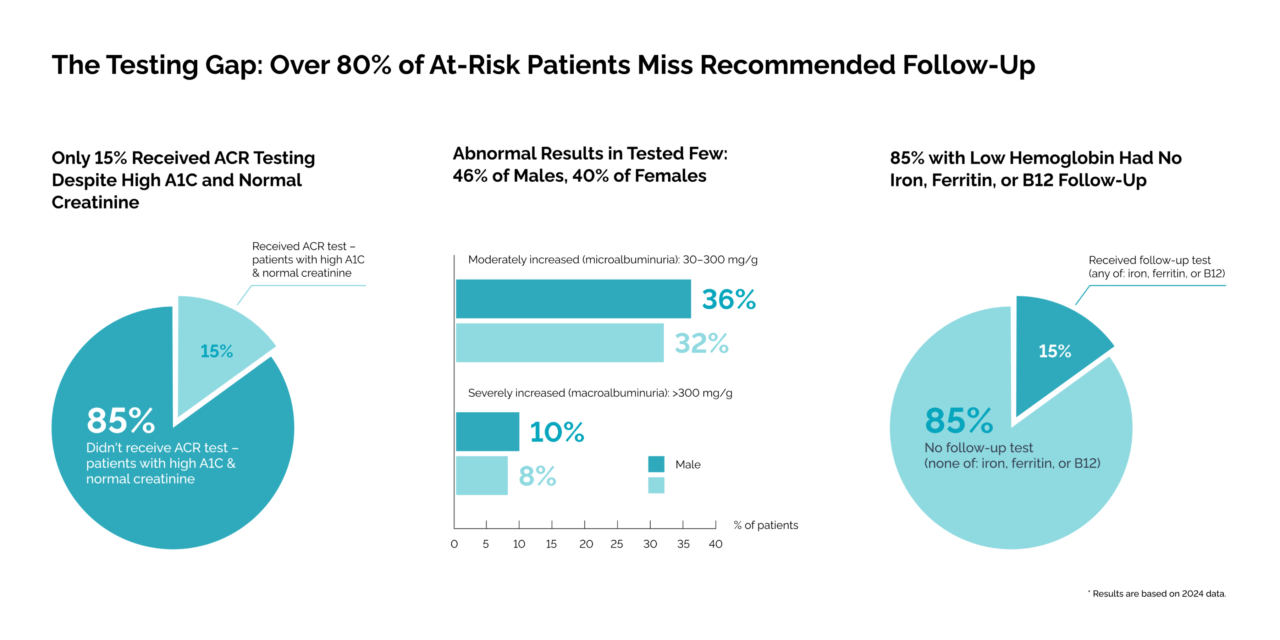
Analysis of more than 84,000 patient records highlights the role of clinical laboratories in identifying gaps in care.
More than 80% of at-risk patients did not receive recommended follow-up testing, according to a study conducted by Vivica and ACCU Reference Medical Lab. The analysis, which examined laboratory data from two cohorts representing 84,259 patient records, highlights the role of laboratory data in identifying gaps in patient care.
The study utilized Vivica LabReports, a laboratory-assisted software platform that compares lab orders against established US clinical guidelines to identify potential testing gaps and notify physicians. The findings are based on patient records analyzed during the 2024 study period.
Identifying Testing Gaps in Kidney Disease and Anemia
Key findings from the analysis showed that only 15% of patients (4,037 of 26,949) with high A1C and normal creatinine received the recommended Albumin-to-Creatinine Ratio test. Among those who did not receive the test, 46% of males and 40% of females showed abnormal kidney function results. Projections from the study suggest that approximately 43% of the 22,912 patients who missed the test are at risk of kidney disease.
In a separate cohort, the study found that 85% of patients with low hemoglobin did not receive follow-up tests for Iron, Ferritin, or B12.
“Laboratories sit on some of the most clinically actionable data in the healthcare system,” says Alexander Ostrovsky, Vivica founder, in a release. “This study demonstrates that when labs are equipped with the right analytical tools, they can support physicians in better-informed clinical decisions, contributing to improved patient outcomes and the achievement of value-based care goals.”
Laboratory Infrastructure and Clinical Guidelines
The patient data and operational infrastructure for the study were provided by ACCU Reference Medical Lab, a laboratory based in New Jersey that is certified under the Clinical Laboratory Improvement Amendments and accredited by the College of American Pathologists.
In addition to identifying care gaps, the study noted that aligning testing with clinical guidelines supports laboratory sustainability by uncovering missed billable opportunities and reducing unreimbursed testing. The study was published through the Project Santa Fe Foundation Clinical Lab 2.0 initiative.
Photo caption: Vivica ACCU Reference study results
Photo credit: Axxilion LLC


