The company will highlight a new PD-L1 indication for ovarian cancer and end-to-end digital pathology workflows at the annual meeting in San Antonio.
Agilent Technologies will showcase expanded biomarker testing capabilities and end-to-end digital pathology workflows at the 2026 United States and Canadian Academy of Pathology (USCAP) Annual Meeting, scheduled for March 21–26 in San Antonio, Texas.
Among the featured advances is a new programmed death-ligand 1 (PD-L1) indication for epithelial ovarian, fallopian tube, or primary peritoneal carcinoma, according to a release from the company. The addition builds on Agilent’s existing PD-L1 portfolio and is aimed at supporting laboratories as biomarker testing needs evolve alongside increasingly complex therapeutic landscapes.
Agilent will also demonstrate progress in end-to-end digital pathology workflows designed to help laboratories improve efficiency, reproducibility, and confidence while scaling for future demand, according to the company. These workflows integrate staining, imaging, and data management to support streamlined slide digitization, organization, and case review—from slide preparation through digital image capture.
“USCAP is a critical forum for sharing meaningful advances in pathology that directly impact patient care,” says Majken Nielsen, vice president of clinical businesses and head of CDD product management at Agilent, in a release. “Our continued investment in precision oncology biomarkers, digital pathology, and scalable platforms like the Dako Omnis family of instruments reflects Agilent’s commitment to helping laboratories navigate increasing complexity while delivering confident, reproducible results.”
Ecosystem Partnerships and Interoperability
Throughout the meeting, Agilent will collaborate with members of the digital pathology ecosystem—including Hamamatsu, Proscia, PathAI, and Visiopharm—to demonstrate interoperable solutions that support open, flexible adoption of digital pathology technologies, according to the company. Agilent says these collaborations reinforce its role as a provider of integrated pathology solutions.
Lunit and Agilent have previously partnered to develop artificial intelligence (AI)-powered companion diagnostics, signaling the company’s continued investment in data-driven pathology.
Educational Sessions at USCAP 2026
Agilent will host and participate in several educational sessions during the meeting. On Monday, March 23, the company will host a digital pathology symposium titled “Future Ready Total Pathology Workflows: Integrating Advanced Staining and Digital Solutions in Today’s Practice” from 12 to 1 pm in Seminar Room 7. The session will feature two presentations: “The Intersection of Pathology and Digital Workflows,” presented by Dr Doug Clark, Agilent associate vice president and pathologist, and “The ROI Case for Implementing Digital Pathology/Realized Benefits Mid Adoption,” presented by Melonie Falcon, chief executive officer of Delta Pathology.
On Tuesday, March 24, a session titled “Gastric Cancer and PD-L1 Expression: Morphology, Biomarker Landscape, and Case Analysis” will be presented from 12 to 1 pm in Seminar Room 2 by Dr Deborah Jue, Dr Mar Iglesias Comma, and Dr Ashish Mogal.
On Wednesday, March 25, Dr Marie Smithgall, assistant professor at Columbia University Irving Medical Center, will present “PD-L1 in Epithelial Ovarian, Fallopian Tube, or Primary Peritoneal Carcinoma (EOC): Scoring for a Newly Established Indication” from 12 to 1 pm in Seminar Room 2.
Dako Omnis Platform as a Scalable Foundation
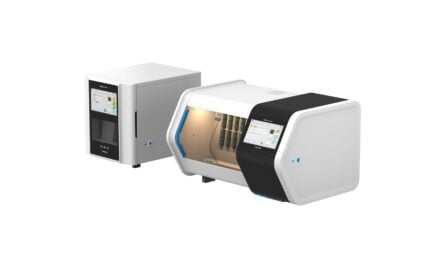
Central to Agilent’s USCAP presence is the Dako Omnis family of instruments, which the company is positioning as a foundation for scalable, automation-ready pathology laboratories. The platform supports immunohistochemistry (IHC) and in situ hybridization (ISH) workflows and is designed to serve as a base for laboratories transitioning toward more connected, data-driven pathology environments, according to the release.
Agilent’s strategy at USCAP reflects the company’s broader aim to expand from staining, IHC, ISH, and companion diagnostics into fully integrated, digital-enabled pathology workflows by combining reagents, scalable platforms, and ecosystem partnerships.
ID 93706186 © Sean Pavone | Dreamstime.com
Related Reading:
FDA Approves PD-L1 Test to Guide Immunotherapy in Ovarian and Related Cancers
Lunit and Agilent Partner to Develop AI-Powered Companion Diagnostics
Agilent Technologies to Acquire Biocare Medical in $950 Million Deal
Sakura Finetek and Hamamatsu Photonics Partner to Advance End-to-End Digital Pathology Workflows