The noninvasive method uses paper spray and mass spectrometry to identify disease biomarkers in less than 30 seconds.
Researchers at the University of Florida have developed a rapid, noninvasive urine diagnostic test designed to identify biomarkers for prostate cancer and other prostate health disorders. The method, described in the journal Analytical Chemistry, aims to help guide and personalize treatments for the disease.
Prostate-specific antigen (PSA) tests are commonly used to screen for the disease by detecting high PSA levels in the blood. However, PSA levels can be elevated by noncancerous conditions such as an enlarged prostate, prostatitis, a urinary tract infection, or recent sexual activity.
“We need new screening technologies that can guide fast, efficient, patient-friendly, and safe diagnosis and treatment options to manage aggressive disease,” says Timothy Garrett, PhD, an associate professor and chief of experimental pathology in the University of Florida department of pathology, immunology, and laboratory medicine, in a release.
Mass Spectrometry and Paper Spray Technology
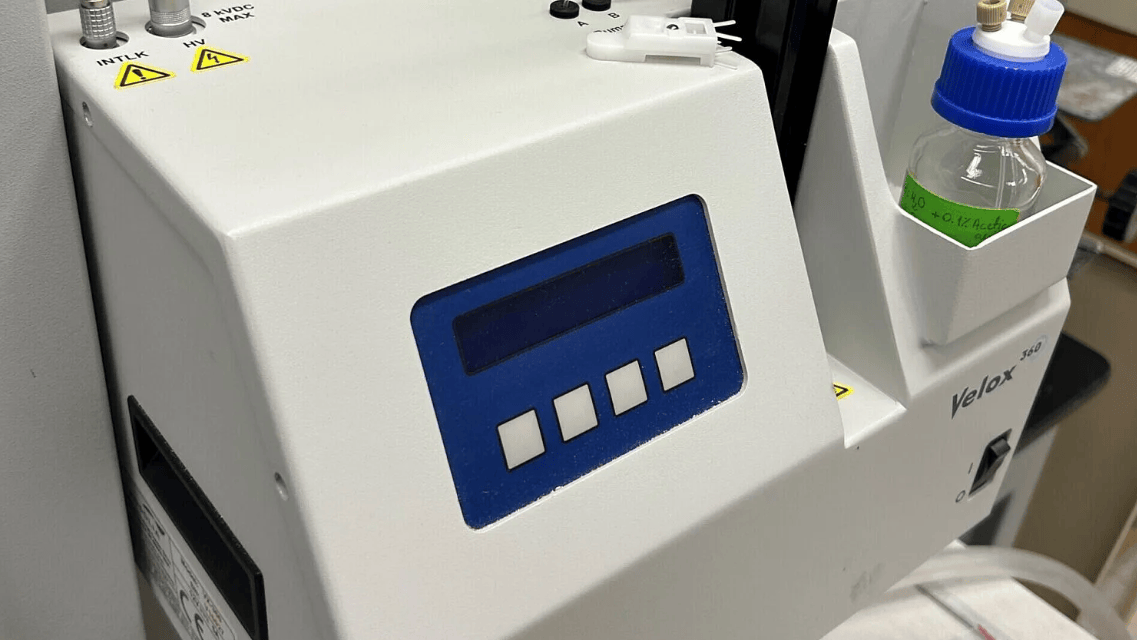
The new method utilizes a technique called paper spray. Researchers apply a urine sample from a specimen cup to a triangular piece of paper. An electric current is then run through the paper to create a spray, which causes metabolites to ionize. Metabolites are small molecules produced by the body that can serve as biomarkers of disease.
These ionized metabolites are measured with a mass spectrometer. The process allows samples to be analyzed in less than 30 seconds and does not require a digital rectal exam, which is an advantage over some existing urine-based prostate tests that can help reduce unnecessary biopsies.
“We are able to identify specific metabolites that allow for the clear diagnosis of prostate cancer from several prostate disorders such as enlargement or infection of the prostate gland,” says Garrett, the study’s senior author, in a release. “This means we can develop a rapid screen that combines the collection of urine, analysis on paper, and identification of several prostate disorders from a single test.”
Study Results and Diagnostic Accuracy
In the study, the research team used the method to analyze samples from 40 individuals, including healthy men and those with an enlarged prostate, prostatitis, or prostate cancer. The researchers identified 37 significant features among the conditions, demonstrating the test’s ability to classify various prostate health disorders.
“The test had strong predictive accuracy, showing its promise as a noninvasive diagnostic tool,” says Garrett in a release. “Results from our pilot testing clearly distinguish prostate cancer from other prostatic disorders, improving diagnostic accuracy.”
The research team, which included first author Iqbal Mahmud, PhD, a postdoctoral associate at the University of Florida, was supported by the University of Florida Clinical and Translational Science Institute. The team plans to work toward a large-scale test that can be used in a home setting to increase testing availability.
Photo caption: The paper spray ionization source used in the new diagnostic test.
Photo credit: UF Health