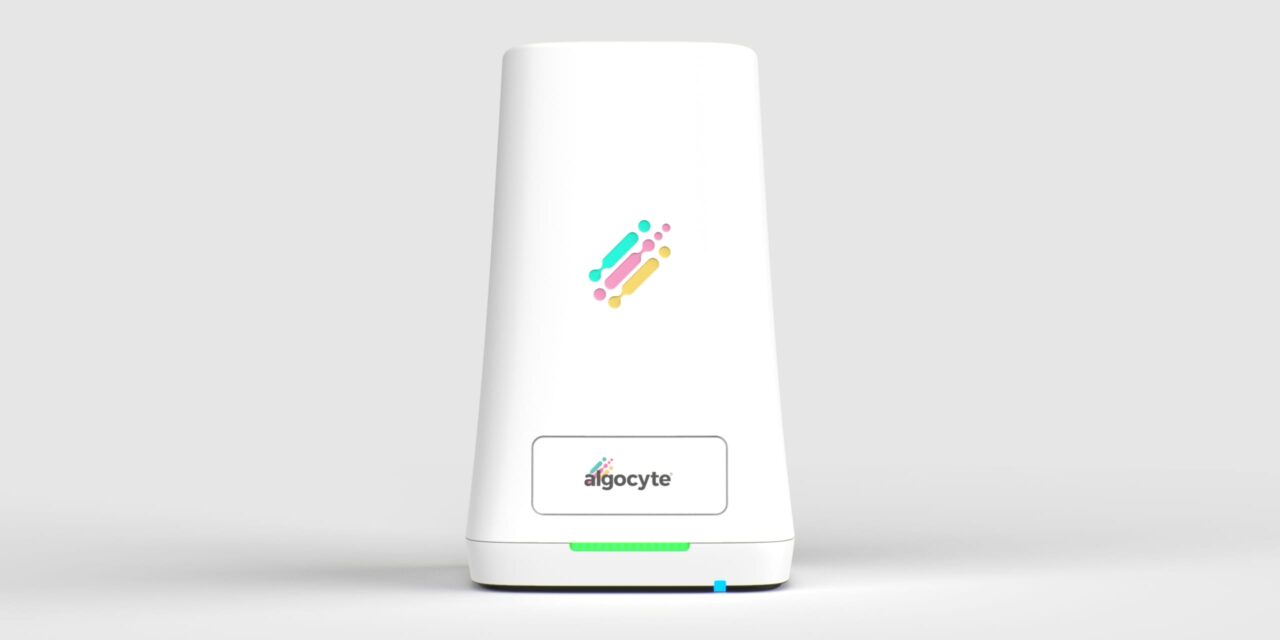
The complete blood count analyzer, cleared for commercial use with UKCA marking, requires a small blood sample comparable to that used by a glucose meter.
Algocyte unveiled its Algocyte Proxima Mobile Health Station, a portable hematology instrument designed for regular and remote blood monitoring. The device, a complete blood count analyzer, was designed and manufactured in the United Kingdom.
The system is designed for use by non-specialized healthcare providers. It requires a small blood sample comparable to that used by a glucose meter, allowing for testing outside of traditional clinical environments.
“Healthcare has traditionally relied on seldom measurements taken during periods of illness. Our ambition is to move towards a better understanding of the transition between health and disease by taking more regular measurements,” says Hector Zenil, founder and CEO of Algocyte, in a release.
The analyzer utilizes a hybrid artificial intelligence (AI) architecture that combines bright field imaging and spectrometry. This physics-informed approach grounds the AI models in physical measurements to support performance and validation. The instrument can gather information on 13 markers, including hemoglobin, hematocrit, platelets, red blood cells, and white blood cells such as neutrophils, lymphocytes, and monocytes. For certain markers like hemoglobin and hematocrit, the device can gather results in as little as five minutes, according to a release from the company.
The company also announced it has achieved the United Kingdom Conformity Assessed mark for the device as an in vitro diagnostic general class medical instrument. This certification marks the system’s readiness for commercial deployment.
“By combining advanced blood analysis, AI, and individual health data, we want to support earlier insight and more personalised healthcare decisions, for better outcomes,” says Zenil in a release.
The portable instrument is operated via a mobile phone over Bluetooth and can function using an external power bank. It has been tested across various connectivity environments, including Ethernet, WiFi, 5G, and 4G hotspots.
Algocyte is currently progressing through regulatory pathways in additional jurisdictions. The expansion is supported by early-stage pilot programs in the United Kingdom, Canada, and the United Arab Emirates, including evaluations within National Health Service laboratory operations and a Canadian government rural community hub.
The launch event, held at the Royal Society of Medicine, included demonstrations of a virtual reality training platform. The platform allows healthcare professionals to learn how to operate the instrument within a virtual environment simulating the testing workflow.
Photo caption: Proxima
Photo credit: Algocyte