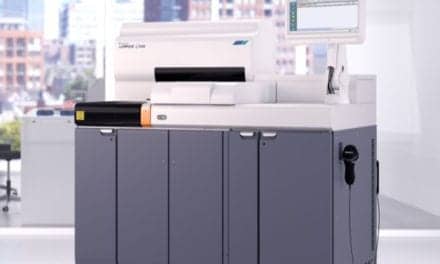
ACES Diagnostics’ LymeSeek immunoassay achieved 90% sensitivity within two weeks of symptom onset, according to a study published in the Journal of Clinical Microbiology.
A new peer-reviewed study published in the Journal of Clinical Microbiology demonstrates the potential of LymeSeek, a single-tier Lyme disease diagnostic test developed by ACES Diagnostics and research collaborators, to improve infection detection during early stages when conventional serologic testing often shows limited sensitivity.
The study evaluated LymeSeek, a multiplex bead-based flow immunoassay designed to detect IgM and IgG antibody responses to a panel of eight Borrelia burgdorferi antigens. A proprietary algorithm developed using machine learning analyzes antibody-binding patterns to return a binary “detected” or “not detected” result.
In an initial training and validation cohort of 467 samples, LymeSeek demonstrated 90% sensitivity and 93% specificity across disease stages. In a separate evaluation of 50 patients with early Lyme disease, the assay identified 90% of cases within two weeks of illness onset and 100% of cases within 15 to 30 days.
“Early diagnosis remains one of the most important challenges in Lyme disease because the tests clinicians rely on today can have limited sensitivity during the first weeks of infection,” says Tammy Crawford, founder & CEO of ACES Diagnostics, in a release. “These findings demonstrate the potential of LymeSeek to provide clinicians with meaningful diagnostic information during precisely that period of uncertainty.”
Addressing the Diagnostic Gap
Standard laboratory evaluation for Lyme disease relies on a two-tier serology protocol, which frequently produces false-negative results during the initial weeks before an individual mounts a detectable antibody response.
To evaluate performance in this diagnostic window, the study examined 30 clinically diagnosed Lyme disease cases that yielded negative results on standard two-tier serology. LymeSeek detected 70% of cases among patients presenting with erythema migrans (EM) lesions, and 60% of cases among symptomatic patients without EM.
The researchers also evaluated assay reproducibility following technology transfer from the original academic development setting at Tulane University to a commercial manufacturing environment at Protavio Ltd in Greece. Evaluated in a separate cohort of more than 250 individuals, the assay achieved 90% sensitivity and 98% specificity, demonstrating consistent analytical performance after transfer.
“These results reinforce the scientific foundation behind our approach to Lyme disease diagnostics,” says Holly Ahern, chief scientific officer at ACES Diagnostics and study co-author, in a release. “Our goal is to help close the diagnostic gap that exists during early infection and ultimately give healthcare providers a more sensitive tool to support clinical decision-making.”
Clinical Trials and Regulatory Timeline
Development of the test received support from Bay Area Lyme Ventures, a venture philanthropy initiative of the Bay Area Lyme Foundation. The study also utilized patient specimens provided by the Lyme Disease Biobank, which houses samples from more than 1,250 participants to support diagnostic and therapeutic development.
“For more than a decade, Bay Area Lyme Foundation has invested in the research and innovation needed to address significant gaps in Lyme disease diagnosis and treatment,” says Liz Horn, PhD, MBI, principal investigator of the Lyme Disease Biobank and study co-author, in a release. “These results from ACES Diagnostics and LymeSeek are encouraging and demonstrate the potential for innovative diagnostic approaches to help address the challenges of detecting Lyme disease early.”
ACES Diagnostics is initiating clinical trials for LymeSeek across three clinical laboratory sites in October 2026. The company has begun the FDA 510(k) pathway, with commercial availability planned for the second quarter of 2027, pending regulatory clearance.
ID 181561059 © KPixMining | Dreamstime.com