In a 30-patient case series, the spatialomics test guided management changes in 90% of patients with non-dysplastic disease.
Castle Biosciences announced the publication of a study showing that its TissueCypher Barrett’s Esophagus Test guided risk-aligned management decisions for patients diagnosed with non-dysplastic Barrett’s esophagus.
The case series evaluated 30 patients with NDBE who received testing during clinical care at Keck Medical Center of the University of Southern California. According to the findings, clinicians altered their management recommendations 90% of the time after receiving TissueCypher results. This included escalating management for 100% of patients with intermediate- or high-risk results and de-escalating management for 84% of patients categorized as low risk.
The study was published in Foregut: The Journal of the American Foregut Society. Findings were also presented at the American College of Surgeons Clinical Congress 2026 in Washington, DC.
“All patients in this study had the same non-dysplastic Barrett’s diagnosis, but TissueCypher showed that their risk of progression differed,” says Caitlin C Houghton, MD, board-certified foregut surgeon at Keck Medicine of the University of Southern California in Los Angeles and study author, in a release. “The test results helped us tailor management to each patient’s individual risk—whether that meant closer surveillance or endoscopic eradication therapy for patients with intermediate- or high-risk results, or a longer surveillance interval for those with low-risk results. Ultimately, TissueCypher can help us detect patients at increased risk who may benefit from earlier surveillance or treatment and avoid unnecessary procedures for patients at lower risk.”
Stratifying Risk Beyond Standard Histopathology
Barrett’s esophagus is a precancerous condition that can advance to high-grade dysplasia (HGD) or esophageal adenocarcinoma. Patients with NDBE represent the majority of individuals undergoing routine endoscopic surveillance and are conventionally viewed as having a low risk of progression. However, traditional clinicopathologic factors alone may not reliably identify the subset of NDBE patients who carry an elevated progression risk.
TissueCypher is indicated for patients with Barrett’s esophagus classified as non-dysplastic, indefinite for dysplasia, or low-grade dysplasia. The test provides a five-year risk assessment designed to assist physicians in tailoring clinical management to a patient’s specific risk profile.
Utilizing an artificial intelligence-derived spatialomics method, the test identifies molecular signatures that often emerge prior to the morphological development of dysplasia. The assay is performed on standard esophageal pinch biopsies collected during routine endoscopy, integrating into existing laboratory workflows without requiring additional tissue collection procedures.
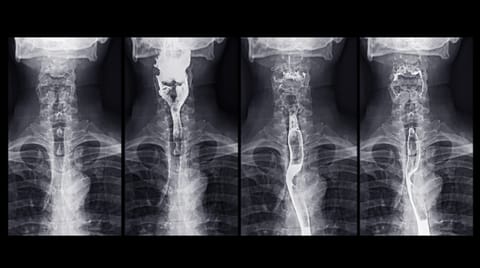
ID 254852847 | Esophagus © Mr.suphachai Praserdumrongchai | Dreamstime.com