
Modern diagnostic tools—such as next-generation sequencing—are enabling higher-resolution HLA typing for stem cell transplants, supporting faster and more precise donor-recipient matching.
By Dave Lowe, PhD, senior director of research & development of transplant diagnostics, Thermo Fisher Scientific
Stem cell transplantation, also commonly referred to as hematopoietic stem cell transplantation (HSCT), is a powerful frontline treatment for a range of disorders, including blood cancers, bone marrow failure syndromes, such as aplastic anemia, and certain inherited blood disorders like sickle cell anemia.
In each of these instances, being able to determine the most suitable donor by virtue of human leukocyte antigen (HLA) matching is a critical clinical requirement. Modern diagnostic tools, such as next-generation sequencing (NGS)-based workflows, have enabled advanced HLA typing. These tools provide the highest resolution of donor-recipient HLA assessment and have equipped transplant teams with the information they need to confirm HLA compatibility.
In day-to-day clinical practice, HSCT is far from a standalone procedure. This treatment requires that healthcare teams manage a series of outcomes from donor identification through to transplant preparation, engraftment, and post-transplant care. At every stage, clinicians are balancing urgency with precision as they work to treat these challenging diseases while aiming to manage and mitigate potential complications.
That’s why transplant diagnostics play an important role in informing clinical decision-making. When transplant teams have access to better data faster, they may support more informed clinical management decisions.
The Importance of Speed and Precision in Clinical Practice
As stem cell transplants become more common, there is a need for ever more comprehensive and well-defined donor populations ready to be mobilized to meet clinical demand. In fact, according to the Health Resources & Services Administration, more than 83,000 new adults were added to the donor registry in 2025, which means that labs and registries supporting transplantation should be prepared to type and characterize large volumes of donor data efficiently. At the same time, clinical labs need technologies that enable them to make faster, more accurate decisions for their patients, especially when the timeline to transplant can be constrained by disease progression, donor availability, and operational realities of coordinating across multiple care teams.
With HSCT, even the smallest incompatibilities can alter risk, which is why speed cannot come at the expense of precision in transplant diagnostics. HLA disparity may cause clinical complications, including delayed engraftment of donated cells, graft rejection, or serious, life-threatening outcomes such as graft versus host disease. Over the years, the industry has learned that accurate donor-recipient compatibility assessment depends on high-confidence genotyping.
Serology was foundational to HLA typing, but it could only distinguish between broad antigen groups. This left room for hidden incompatibilities that influence engraftment and immune reactivity. As a result, donor-recipient pairs that were deemed compatible often resulted in post-transplant complications. With NGS-based testing, there is far less ambiguity when defining HLA genotyping. In the past 10 to 15 years, NGS has become more practical in routine settings, supported by technological innovation in sequencing platforms, assay design, and analytics.
By enabling comprehensive sequencing, NGS-based testing delivers reliable HLA typing data that can be scaled to meet modern clinical demands. For example, NGS can support donor typing across large registries and global transplant programs with diverse patient populations with the level of detail transplant teams need for accurate donor selection and risk assessment. More precise matching may provide additional information to support donor selection decisions. Being able to access higher resolution results earlier supports more efficient donor selection and improved care coordination, helping teams move from data to action with fewer delays.
The Case for Automation in Clinical Laboratories
For high-volume clinical laboratories and donor registries where high throughput is required, the challenge is often operational. Today, labs are expected to deliver high-confidence genotyping results while also facing real-world constraints including staffing limitations, variable sample intake, and reduced budgets. Labs need technologies that support high-resolution donor-recipient HLA typing by making performance more repeatable and less dependent on individual techniques.
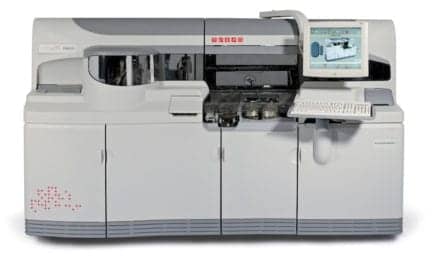
Automated capabilities help simplify assay setup, standardize processes, and streamline HLA workflows. In turn, these technologies may reduce hands-on time and variability. Automated technologies incorporate checkpoints intended to support quality and traceability. These features further enhance confidence in sample and process integrity and the corresponding results.
As the need for tighter turnaround times intensifies, the potential value for automation increases, helping transplant teams meet demand without compromising scientific rigor.
An Evolving Landscape with Modern Diagnostics at its Core
The diagnostics supporting stem cell transplantation have evolved tremendously over the years, led by the advent of innovative technologies that enable healthcare professionals to make more informed decisions, from donor matching to new therapeutic approaches. As these technologies continue to advance, there’s a need for further integration with transplant registries and other clinical tools and clinical standardization for training, reporting, and quality control across labs and healthcare systems. This end-to-end connectivity can ultimately help speed up the time from genotype to decision.
Clinical practice continues to evolve alongside advances in diagnostics. Developments in immunosuppression strategies, including post-transplant cyclophosphamide, have broadened the range of donor matching approaches used in clinical practice, including cases with greater genetic differences between donors and recipients. Ongoing research is exploring how these genetic differences may be associated with transplant outcomes and relapse risk. Historically, testing has focused on “classical” HLA loci; however, emerging evidence suggests that additional “non-classical” HLA genes in the same genomic region may also be relevant to graft outcomes. As broader donor matching approaches are increasingly considered, healthcare teams may evaluate patients for antibodies directed against HLA differences as part of transplant assessment and decision-making.
This is a reminder that transplantation immunology is not static. As we widen clinical eligibility and donor options, there is an increasing incentive to better understand genetic contributors beyond traditional loci and to translate that understanding into practical testing and interpretation.
The transplant process can be long, arduous, and complex, but, for many patients, transplantation is far less restrictive than other treatment options and holds the potential for improved quality of life. That’s why continued investment in innovation and thoughtful adoption into routine practice matters. Modern diagnostics help healthcare professionals understand the genetic and physiological realities of a donor and a patient. As more data is generated, the next frontier is making it more clinically usable with better integration, standardization, and analysis that turns insights into actionable information to support clinical decision-making.
IID 149507061 | Up © Inews77 | Dreamstime.com
About the author: Dave Lowe is the senior director of research and development for the transplant diagnostics business of Thermo Fisher Scientific. He holds a PhD in transplant immunology from the University of Warwick and previously served as the head of the transplant immunology department for the Royal Liverpool and Broadgreen University Hospital NHS Trust in Liverpool, England.
Related Reading:
Thermo Fisher Scientific Introduces One Lambda HybriType Assay
Study Finds Test Helps Distinguish Infection From Inflammation in Bone Marrow Transplant Patients
Thermo Fisher Launches Pharmacogenetic Test for Transplant Drug Dosing
Takara Bio USA and Hamilton Company Partner to Automate NGS Library Preparation