Adding three urinary biomarkers to standard donor assessment increased the accuracy of predicting long-term graft function from 80% to 86%.
A study led by researchers at Johns Hopkins Medicine found that a urine test performed on deceased kidney donors could help clinicians make better transplant decisions and reduce the number of organs that go unused.
The study, published in the Journal of the American Society of Nephrology, shows that testing donor urine for three biomarkers—uromodulin, osteopontin, and YKL-40—alongside the widely used Kidney Donor Profile Index (KDPI) provides a more accurate assessment of organ quality than the KDPI alone.
According to the American Kidney Fund, more than 92,000 people in the United States are waiting for a kidney transplant, while nearly one in four recovered donor kidneys goes unused annually due to clinician uncertainty regarding organ quality. Current allocation decisions rely on the KDPI, which estimates risk based on donor age and medical history but has shown only modest ability to predict successful outcomes.
In a multicenter observational study, investigators analyzed 474 deceased donors whose kidneys were transplanted into two separate recipients. By following recipients for three years, the team determined that adding the biomarker panel to the KDPI increased the accuracy of predicting long-term graft function from 80% to 86%. The approach also improved the identification of kidneys likely to have favorable outcomes by 10 percentage points while maintaining a specificity of 78%.
“We have been evaluating donor kidneys almost entirely on the donor’s history; their age, their diagnoses, a single creatinine value,” says Chirag R. Parikh, MD, PhD, director of the division of nephrology at the Johns Hopkins University School of Medicine and senior author of the study, in a release. “These biomarkers tell us something the KDPI cannot: whether the kidney itself is repairing. That turns out to be a far better predictor of how it will work in a patient.”
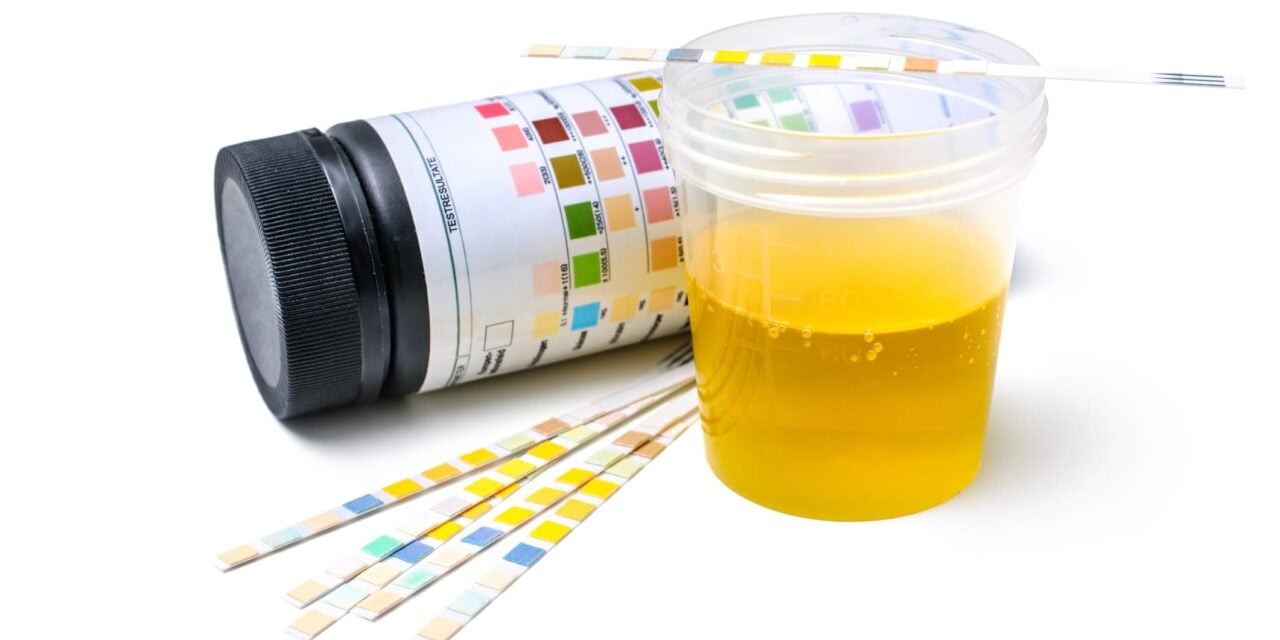
The three biomarkers can be measured using inexpensive urinary flow devices similar to at-home pregnancy tests. These point-of-care tests produce results within 30 minutes, which the researchers say makes them practical for the fast-paced organ procurement process. The study demonstrated that the panel maintained predictive performance whether measured via laboratory immunoassays or rapid lateral flow devices.
Modeling based on data from more than 1,500 deceased donors suggests that biomarker-guided assessments could reduce unnecessary kidney biopsies by approximately 20% and return at least one kidney to the transplant pool in about 7% of donors whose organs would otherwise be rejected. In a hypothetical group of 10,000 donors, this approach could potentially make 700 additional kidneys available for transplantation.
“Every kidney that is donated but not transplanted is a patient who stays on dialysis,” says Parikh in a release. “If a test that is inexpensive and takes minutes can return even a portion of those organs to the pool, that matters enormously to the people who are waiting for a kidney transplant.”
ID 32337320 | Healthcare © Alexander Raths | Dreamstime.com