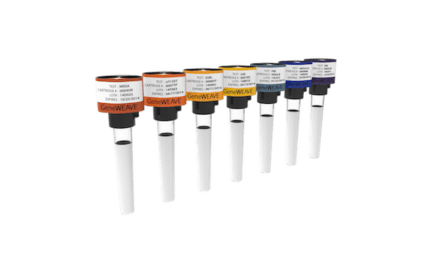
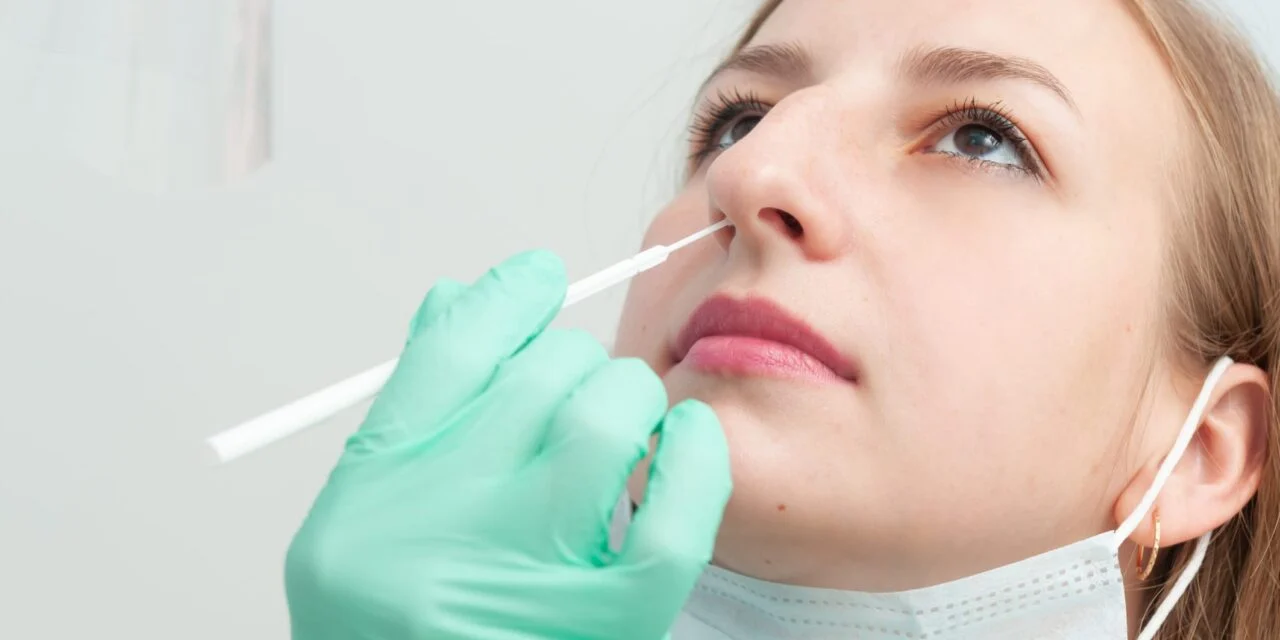
The system simultaneously detects RSV, influenza A and B, and SARS-CoV-2 from a nasal swab in under 10 minutes.
Autonomous Medical Devices Inc received Food and Drug Administration (FDA) 510(k) clearance and a Clinical Laboratory Improvement Amendments (CLIA) waiver for its Fast PCR Instrument and Mini Respiratory Panel. The system is a multiplex reverse transcription polymerase chain reaction (RT-PCR) test for the simultaneous detection and differentiation of respiratory syncytial virus (RSV), Influenza A, Influenza B, and SARS-CoV-2 from anterior nasal swab specimens.
The system delivers sample-to-answer results in under 10 minutes, which the company says allows healthcare providers to act during urgent care and physician office visits.
“Pursuing the FDA’s dual 510(k) clearance and CLIA waiver pathway was a deliberate strategy to bring this innovation to market with the validation needed for clinical use in the urgent care setting,” says Aiying Sun, executive vice president of quality, regulatory, and clinical affairs at Autonomous Medical Devices Inc, in a release. “It shows that Fast PCR combines strong RT-PCR performance with the simplicity needed for confident molecular testing at the point of care.”
The Mini Respiratory Panel is a 4-plex molecular panel that detects key upper respiratory viruses. RSV is a primary target for the panel because the virus can cause significant disease in infants, older adults, and patients with underlying risk factors.
The system “combines streamlined workflow with lab-quality molecular testing during the office visit, making it an ideal solution for urgent care and physician offices particularly those requiring RSV testing results,” says Brian Miller, executive vice president of marketing at Autonomous Medical Devices Inc, in a release. “With results available while the patient is still present, providers can make timely diagnostic and treatment decisions with greater confidence while improving the patient experience.”
Christopher Price, MD, clinical investigator at ERA Health Research, says the system fits into clinic workflows without adding complexity.
“Staff can run the test without adding complexity, and getting a molecular result during the visit helps us make decisions while the patient is still in front of us instead of chasing follow-up later,” says Price, in a release.
The platform is built on proprietary HBH technology and an architecture designed for scalability up to 32-plex for future testing menu expansion. The system also features cloud connectivity, operational visibility, and integration with electronic health records. Frank Gill, chief operating officer of Autonomous Medical Devices Inc, says the company has scaled manufacturing for both instruments and consumables to support long-term adoption.