
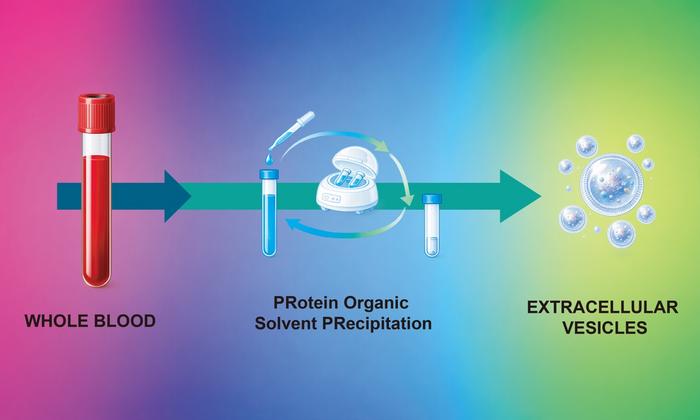
An optimized method for isolating extracellular vesicles from whole blood revealed protein and lipid signatures not detected in plasma.
Researchers have optimized the PRotein Organic Solvent PRecipitation (PROSPR) method for the rapid and standardized enrichment of extracellular vesicles (EV) directly from whole-blood samples, according to a study published in Extracellular Vesicles and Circulating Nucleic Acids.
While whole-blood samples are stored extensively in biobanks globally, most current research into circulating EVs relies on plasma or serum. This common practice excludes a portion of biological information and may overlook molecular signals relevant to disease mechanisms and the discovery of biomarkers.
The optimized workflow produces purified EV preparations while preserving vesicle morphology, membrane integrity, and stability, the researchers say in a release. The method is designed to be rapid, accessible, and compatible with standard laboratory equipment to facilitate adoption in clinical and biomedical research settings.
Capturing Complementary Biological Information
The study’s primary finding was that EVs derived from whole blood contained coordinated platelet- and mitochondria-associated protein and lipid signatures. These signatures were not detected in corresponding EV fractions derived from plasma.
By analyzing whole-blood EVs, researchers can capture complementary biological information that is typically lost when examining only plasma or serum. The performance of the PROSPR method was validated using standard methodology followed by high-depth systems biology and multiomics analyses.
Expanding Biomarker Discovery Opportunities
The ability to analyze underused archived whole-blood samples provides a practical strategy to utilize national and international biobank collections. This approach may support deeper investigations into disease mechanisms and expand opportunities for discovering circulating biomarkers for early diagnosis, prognosis, and disease monitoring, the researchers say in a release.
The research was a collaborative effort involving the +Pec Proteomics Research Group at IRBLleida and the University of Lleida in Spain, Brock University in Canada, and Newcastle University in the United Kingdom.
Photo credit: Higher Education Press