Study Identifies Factors That Interfere with Cancer Detection in Liquid Biopsy
Research analyzing cell-free DNA fragmentation patterns in healthy individuals reveals physiological confounders that could improve test accuracy.


Research analyzing cell-free DNA fragmentation patterns in healthy individuals reveals physiological confounders that could improve test accuracy.

A new automated device can diagnose glioblastoma in under an hour using a novel electrokinetic biochip that detects active EGFRs from blood.





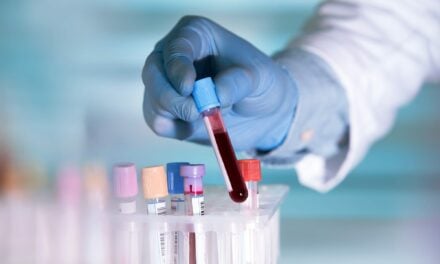
VolitionRx detailed a new liquid biopsy cancer-detection method at the annual congress of the European Society for Medical Oncology.





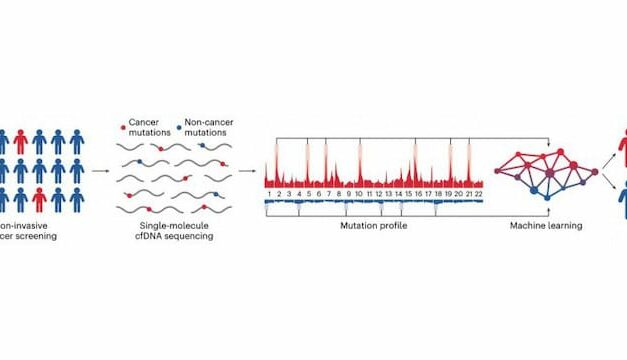
New blood testing tech combines genome-wide sequencing of single molecules of DNA shed from tumors and machine learning.
Read More
The new DM-Seq technique allows for scientists to profile DNA using very small samples and without damaging the sample.
Read More
The study’s multi-cancer early detection data show Exai’s RNA- and AI-based platform can detect multiple cancer types at the earliest stages using a single, standard blood sample.
Read More
Singlera Genomics’ PDACatch assay is a novel DNA methylation-based liquid biopsy assay for the detection of pancreatic adenocarcinoma in individuals at high risk for the disease.
Read More
Beacon Biomedical released a colon cancer screening test designed to improve access and affordability to CRC screening as a blood draw.
Read More
A simple blood draw can help determine if peptide receptor radionuclide therapy is effective in a patient with neuroendocrine cancer.
Read More
Guardant Health submitted the final module of its premarket approval application for a colon cancer screening blood test to the FDA.
Read More
Exai Bio is collaborating with Quantum Leap Healthcare Collaborative to broaden the use of its novel, RNA-based liquid biopsy platform.
Read More
Rapid Novor obtained the CLIA certification for its EasyM assay for Multiple Myeloma as a laboratory developed test.
Read More
Investigators at Children’s Hospital Los Angeles investigators have developed a liquid biopsy for pediatric solid tumors.
Read More
Researchers have identified a biomarker that can be used in blood tests to diagnose glioblastoma (GBM), a common type of brain cancer.
Read More
LynxDx is introducing a non-invasive, data-driven, urine prostate cancer screening test to guide clinical decisions for patients.
Read More
Researchers at the University of East Anglia helped develop a blood test to detect prostate cancer with greater accuracy than current methods.
Read More
Researchers developed a new device to identify a key membrane protein in urine that indicates whether the patient has a brain tumor.
Read More
Investigators found that the test was able to distinguish cancer localized to the prostate from cancer that spread to other parts of the body.
Read More