New freezer builds on dual cooling system technology with new energy-saving design to support secure long-term sample storage while reducing cost of ownership.
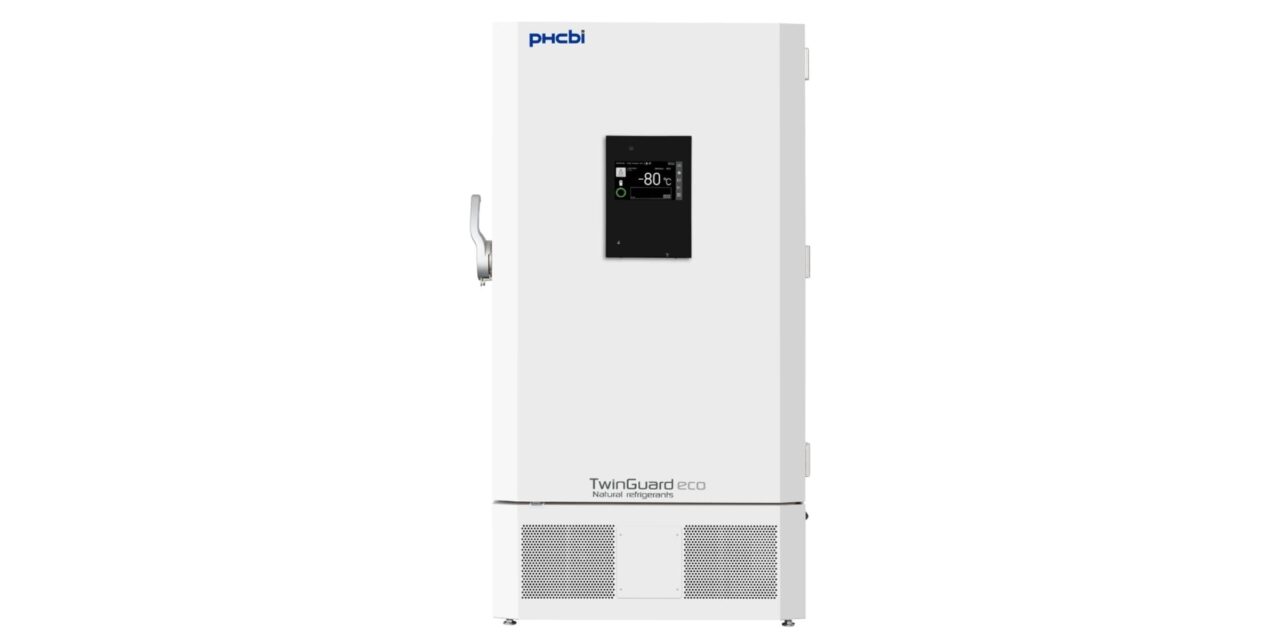
PHC Corp of North America has launched the TwinGuard ECO 703VXH, an ultra-low temperature freezer designed to reduce energy consumption while maintaining sample protection for biorepositories, biopharmaceutical companies, and academic institutions.
The freezer features dual independent refrigeration systems that maintain stable ultra-low temperatures even if one system requires servicing. The model uses natural refrigerants and inverter-controlled compressors, limiting daily power consumption to 7.3 kWh under standard laboratory conditions.
“The TwinGuard ECO 703VXH was developed to help labs meet institutional energy goals while continuing to deliver the trusted sample protection that PHCbi solutions are known for,” says Joe LaPorte, chief innovation officer at PHC Corporation of North America, in a release. “We’re proud to push the boundaries of cold storage technology—supporting life science innovation while reducing environmental footprint and ownership costs.”
Design Features Target Maintenance Costs
The freezer eliminates traditional filters from its design, which the company says reduces maintenance requirements and prevents performance degradation associated with clogged filters. This filterless design supports lower total cost of ownership by reducing routine maintenance needs.
The system includes an advanced access control panel with optional facial recognition and NFC authentication for secure user access and digital traceability. These features align with ISO and cGMP requirements for laboratory compliance.
The TwinGuard ECO 703VXH is available in two models: the MDF-DU703VXHA-PA with 729L capacity and the MDF-DU503VXHA-PA with 528L capacity. Both models build on the design foundation of the company’s 702VX freezer line.
Remote Monitoring Integration
The freezer integrates with PHCbi’s LabSVIFT monitoring system through Gen 3 technology, enabling remote diagnostics and predictive maintenance capabilities. This integration aims to prevent unexpected downtime in laboratory operations.
Traditional ultra-low temperature freezers often require frequent maintenance and high energy consumption, which can increase operational costs and environmental impact for laboratories working to meet sustainability goals while maintaining sample integrity for vaccines, cell lines, and therapeutic materials.
The energy consumption measurement of 7.3 kWh was determined using internal validation standards at 23°C ambient temperature with the freezer set to -80°C under no-load conditions.