Clinical studies found improved melanoma detection sensitivity, while a small US evaluation showed a 20% reduction in slide analysis time.
The Food and Drug Administration (FDA) has granted Breakthrough Device Designation to Cleo Skin, an artificial intelligence solution developed by Primaa to assist pathologists in diagnosing skin cancers from digitized biopsy slides and excised tissues.
Cleo Skin is the first AI tool in dermatopathology to hold both CE-IVDR certification in Europe, which it received in March 2026, and FDA Breakthrough Device Designation. The designation provides Primaa with prioritized interactions with the agency ahead of a future US premarket submission, though it does not constitute US marketing authorization.
Addressing Laboratory Workload in Melanoma Diagnosis
Skin cancer represents the most common cancer in the US, with an estimated 234,680 new melanoma cases projected in 2026. Because each diagnosis depends on a pathologist reading, measuring, and classifying biopsied tissue, growing specimen volumes and ongoing workforce shortages have intensified pressure on pathology laboratories.
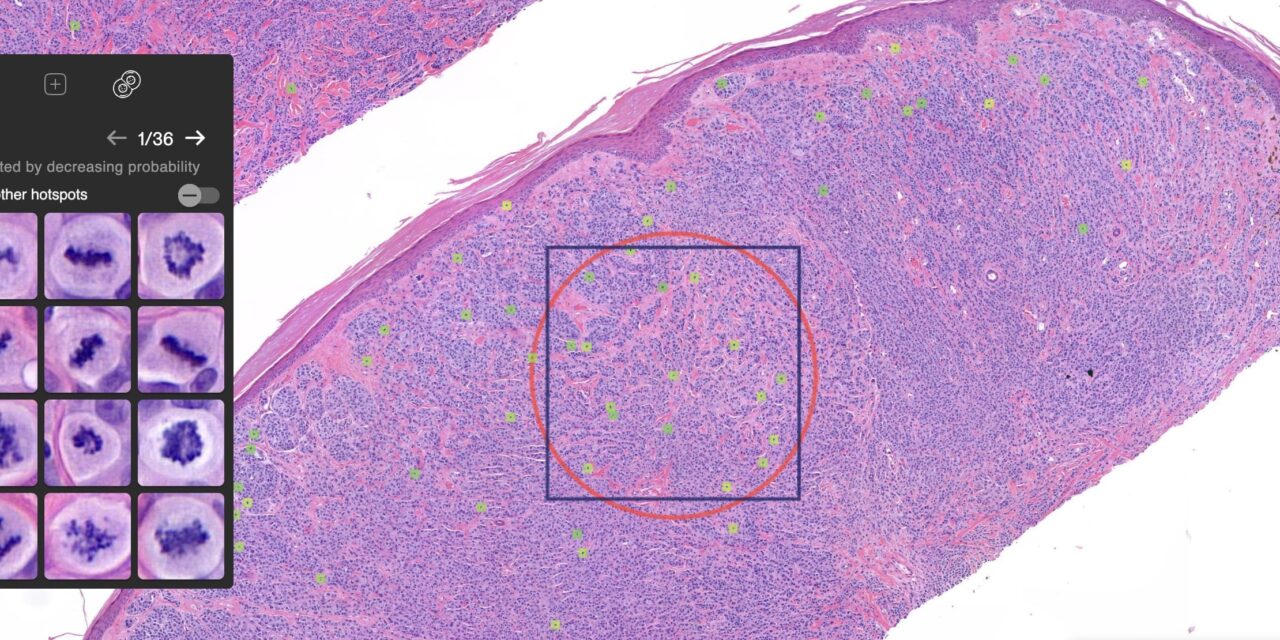
Cleo Skin analyzes whole slide images of skin biopsies and excisions to flag areas suspicious for melanoma, offer indicative lesion classifications—including basal cell carcinoma, squamous cell carcinoma, and nevus—and suggest critical diagnostic measurements such as margins, Breslow thickness, and mitotic regions. Designed to integrate into existing laboratory image management systems, the platform supports rather than replaces pathologist evaluation.
“Receiving the Breakthrough Device Designation is a strong recognition of our mission: to support every pathologist with reliable assistance on every case. Cleo Skin was built with pathologists, for pathologists, and in Europe, where it is already CE-IVDR marked, they rely on it to work faster and with more confidence, whatever their level of experience. We look forward to working closely with the FDA through the Breakthrough Devices Program to bring this support to US pathologists, who face the same growing pressure on skin biopsy volumes,” says Hugo Watel, COO, Primaa, in a release.
Clinical Validation and US Performance Data
The tool is already deployed across pathology laboratories in Europe following validation in the SkinPerf2026 multicenter study. In that trial, 16 pathologists across 11 French institutions evaluated 313 whole slide images; Cleo Skin improved overall melanoma sensitivity from 83.8% to 88.6%. Among junior pathologists, sensitivity for melanoma increased from 79.7% to 88.2%, aligning their performance with senior colleagues, while the median time required to detect mitosis dropped by 24%.
“Mitotic counting remains an important but time-consuming part of melanoma assessment. What is particularly useful about Cleo Skin is that its gallery-based mitosis detection can transform this repetitive search into a more focused and efficient review. This is a practical example of how AI can support, not replace, the pathologist by streamlining routine tasks and allowing greater attention to findings that require expert judgment. I believe this type of human-AI collaboration represents the future of pathology,” says Wonwoo Shon, director of dermatopathology services at Cedars-Sinai Medical Center and founder of Aimes Diagnostics, in a release.
In an exploratory US study conducted in collaboration with PathPresenter, seven pathologists reviewed 75 whole slide images using Cleo Skin integrated directly into their viewer. The evaluation showed a 20% reduction in analysis time alongside a 17% gain in diagnostic sensitivity among junior pathologists.
“The best AI in pathology works in the background and leaves the judgment in the foreground. Cleo Skin acts like a colleague who has already been through the slide, highlighting where to look and proposing key measurements, so the evidence is ready when the pathologist makes the final decision. In our study, junior pathologists gained the most in accuracy,” says Rajendra Singh, associate vice chair of pathology at the University of Pennsylvania and co-founder of PathPresenter, in a release.
Primaa plans to use the Breakthrough Devices Program to maintain ongoing regulatory discussions with the FDA as it prepares its formal submission for US marketing clearance.
Photo caption: Cleo Skin
Photo credit: Primaa