The TRUECAM framework assesses confidence levels in AI-assisted cancer diagnosis and flags uncertain cases for pathologist review.
A research team at The Hong Kong Polytechnic University developed an integrated artificial intelligence (AI) framework named TRUECAM to improve the reliability of pathology AI used in cancer diagnosis.
The framework, which stands for TRustworthiness-focused, Uncertainty-aware, End-to-end CAncer diagnosis with Model-agnostic capabilities, is designed to assess the level of confidence an AI model has in its diagnostic outputs. It proactively prompts pathologists to review cases when uncertainty is high or when input data falls outside the scope of the model, says a release from the university.
Core Functions and Reliability
As a model-agnostic system, TRUECAM can be integrated into pathology AI models of various architectures, sizes, and purposes. The framework features three core functions: detecting out-of-scope inputs, automatically eliminating ambiguous image regions, and applying conformal prediction to keep diagnostic error rates within an acceptable range.
The study, published in Nature Biomedical Engineering, evaluated the framework across multiple datasets using both specialized task models and foundation models. Computational experiments showed that models wrapped with the framework consistently outperformed unwrapped models in classification accuracy, robustness, interpretability, data efficiency, and fairness.
“TRUECAM strikes a sound balance between fully pathology AI-powered and purely pathologists-led cancer diagnosis,” says Zhang Xiaoge, assistant professor of the department of industrial and systems engineering at The Hong Kong Polytechnic University, in a release. “When the model’s confidence in its diagnostic outputs is high, the system can help handle clear-cut cases, while uncertain cases are flagged and passed on to pathologists for further review and clinical judgement.”
Broad Application Potential
The framework is applied to whole-slide imaging, which digitally scans glass tissue slides into high-resolution images for virtual microscopy. While the initial research focused on non-small cell lung cancer subtyping, findings show the system is also applicable to breast, brain, and kidney cancer subtyping, as well as a 46-class pan-cancer slide-level classification.
The research team is currently exploring the inclusion of additional modalities to expand the scope of the framework. These include diagnostic reports and molecular profiles, such as RNA sequencing.
“This AI–pathologist collaboration helps improve diagnostic efficiency, lighten pathologists’ workloads, enhance diagnostic reliability, and scale up diagnostic capacity,” says Zhang in a release. “TRUECAM provides a systematic solution to building trustworthy pathology AI and strengthens the foundation for deploying it in real-world settings.”
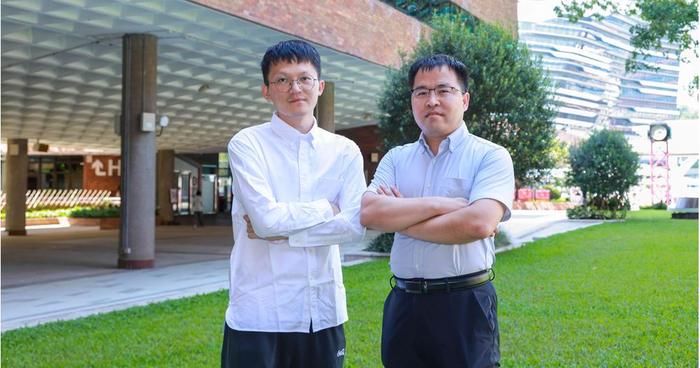
Photo caption: PolyU research team develops trustworthy AI framework TRUECAM to enhance reliability of pathology AI in cancer diagnosis
Photo credit: PolyU