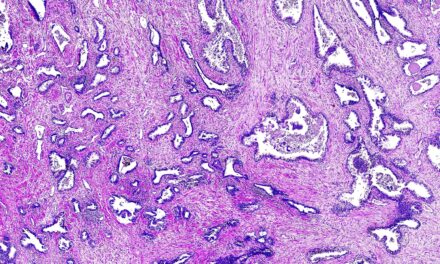

The companion diagnostic identifies PTEN protein loss, helping clinicians determine which patients may benefit from Truqap in combination with abiraterone acetate.
Roche announced that the Food and Drug Administration (FDA) approved the Ventana PTEN (SP218) RxDx Assay, an immunohistochemistry companion diagnostic test to determine PTEN protein loss in patients with prostate adenocarcinoma.
Patients identified with this protein deficiency, also known as PTEN deficiency, may now be eligible for treatment with the targeted therapy Truqap, according to a Roche press release. PTEN is a tumor-suppressor protein, and its loss is associated with faster disease progression and reduced benefit from standard treatments.
“Prostate cancer is one of the leading cancer diagnoses for men in the United States,” says Matt Sause, CEO of Roche Diagnostics, in a release. “The FDA approval of our new companion diagnostic will provide clinicians with a vital tool to identify patients with PTEN loss and potentially provide new therapeutic options.”
Approximately 25% of patients with metastatic hormone-sensitive prostate cancer have PTEN-deficient tumors as evaluated by immunohistochemistry. The average length of survival after a new metastatic prostate cancer diagnosis is about five to six years, according to the company.
The Ventana PTEN (SP218) RxDx Assay is a qualitative immunohistochemical test intended for use in the assessment of PTEN protein in prostate adenocarcinoma. It uses the OptiView DAB IHC Detection Kit for staining on a BenchMark ULTRA instrument. The test serves as an aid in identifying patients who may be eligible for treatment with Truqap in combination with abiraterone acetate.
The approval is based on results from the CAPItello-281 clinical study, where the assay was used to identify patients with PTEN loss. The clinical cutoff for PTEN loss status is 90% or more of viable malignant cells with no specific cytoplasmic staining. Findings from the study showed that patients who received the combination therapy experienced a reduction in disease progression, says the press release.
Foundation Medicine, an affiliate of the Roche Group, is one laboratory using the diagnostic kit to help healthcare providers identify patients with the protein loss.