
Northwestern University engineers developed a point-of-care assay that performed on par with the most widely used molecular test, using specimens that nearly all patients can provide.
Northwestern University engineers have developed a rapid tuberculosis test that works with tongue swabs or sputum specimens and returns results within 20 minutes. The assay is designed for use outside traditional laboratories.
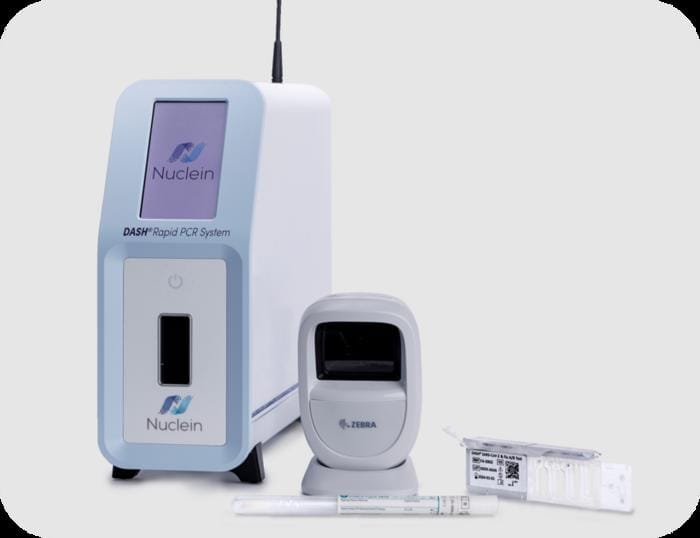
The DASH MTB test runs on the existing DASH (Diagnostic Analyzer for Specific Hybridization) Rapid PCR System, a point-of-care device previously developed at Northwestern. It detects Mycobacterium tuberculosis, the bacteria that cause tuberculosis. The study was published in Open Forum Infectious Diseases.
Because results are available in the field, patients in remote areas who lack access to traditional medical offices could receive testing and care in a single medical visit.
“Diagnosis is the weakest link in tuberculosis care. Tuberculosis diagnosis can be complex and time consuming,” says Sally McFall, a research professor of biomedical engineering at Northwestern’s McCormick School of Engineering and the study’s corresponding author, in a release. “Bacterial culture is the gold standard. It has high sensitivity, but the time-to-result is lengthy, and it is technically challenging and prone to contamination.”
Addressing the Sputum Problem
Sputum offers the highest tuberculosis bacteria load and is the preferred specimen for diagnosis. However, many patients cannot produce enough sputum to test, which led the researchers to evaluate tongue swabs as another rapid option. Sputum is also produced through coughing, and because tuberculosis spreads through infected air droplets that can linger in the air for hours, collection may expose health care workers and other patients.
“Sputum is the preferred specimen for tuberculosis diagnosis, but up to one-third of patients cannot produce sputum and thus cannot be diagnosed,” McFall says in a release. “Here, we tested using tongue swab specimens in addition to sputum and showed high sensitivity and specificity with both specimen types using a test that could provide the result within the clinic visit.”
Performance and Field Readiness
In the study, the test’s performance matched that of Cepheid’s Xpert MTB/RIF Ultra, the most widely adopted molecular test for tuberculosis. DASH MTB reached 100% accuracy on true negative tests and 91% accuracy on true positive results.
The workflow is built for sites without laboratory infrastructure. Non-lab personnel perform three steps to process the patient sample, then load the test cartridge into the analyzer for automated detection. A tongue swab can be collected from nearly everyone with minimal training. The cartridge also demonstrated storage stability at temperatures up to 113 F (45 C), a benefit where electricity, refrigeration, and air conditioning are inconsistent.
Global Burden and Next Steps
The World Health Organization reported that 1.23 million people died from tuberculosis in 2024. The hardest hit communities tend to live in impoverished areas with lower access to testing and treatment, as well as higher risk factors such as less access to housing or nutrition.
“Tuberculosis is the leading cause of death from an individual infectious agent,” McFall says in a release. “A rapid and sensitive test such as the DASH MTB assay could facilitate same day diagnosis and treatment.”
McFall is also co-director of the Center for Innovation in Global Health Technologies, which developed both the DASH system and the new test. Her team previously developed rapid point-of-care tests for COVID and hepatitis C. The work builds on long-standing collaborations with the University of Washington, the University of Cape Town, and Stellenbosch University.
The study was supported by the National Institutes of Health and the Gates Foundation.
Photo caption: The DASH Rapid PCR System can test for tuberculosis in tongue swabs or sputum specimens and have results in 20 minutes.
Photo credit: Sally McFall/Northwestern University


