Sixth-Generation Troponin T Test Shows High Accuracy for Heart Attack Diagnosis
Study of more than 13,000 individuals demonstrates improved precision for emergency department triage and patient outcomes.

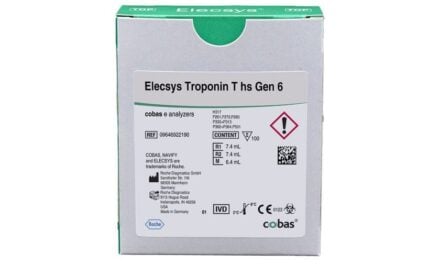
Study of more than 13,000 individuals demonstrates improved precision for emergency department triage and patient outcomes.

The national program will reach about 30,000 primary care providers and cardiologists, and will assess the state of LDL screenings.





Declines in cardiovascular disease death rates stalled for mid-life women compared to men, suggesting sex-specific approaches may be needed.






Researchers at two universities have developed a portable device that may diagnose a heart attack in minutes.
Read More
Researchers are looking to identify the role of hypoxia on red blood cell aging via the biomechanical pathways.
Read More
A new study shows people with type 2 diabetes need to gain control of their blood-sugar levels quickly to lower future health risks, meaning early diagnosis is even more critical than previously thought.
Read More
Performed on the company’s newest analyzer, the Vitros XT 7600 integrated system, the High-Sensitivity Troponin I assay aids in diagnosing heart attacks faster and more accurately.
Read MoreThe nationwide study showed worrisome beliefs surrounding cardiac health and disease prevention.
Read More
Preliminary study findings suggest that a point-of-care test currently under development has accuracy similar to a high-sensitivity troponin test, permitting early rule-out of a heart attack.
Read More
The Siemens Healthineers High-Sensitivity Troponin I assays can detect lower levels of troponin compared to conventional assays, enabling faster results and earlier diagnosis for heart attack patients.
Read More
Researchers theorize that shutting down a gene may reduce heart attack risk.
Read MoreSmall rises in troponin levels may have value as markers for subclinical heart damage and high blood pressure.
Read MoreResearchers at Johns Hopkins Bayview Medical Center used simple tactics to reduce the number of blood tests ordered for assessing symptoms of heart attack and chest pain, and to achieve a large decrease in patient charges.
Read More