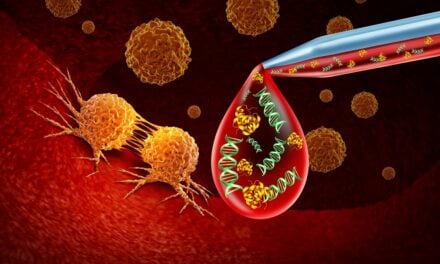
GeneCentric Data Suggest Fragmentomics Could Expand Liquid Biopsy Beyond Mutation Testing
Presentations at AACR 2026 will showcase fragmentomics-based technology for detecting therapeutic markers and providing prognostic insight.
Researchers found that circulating tumor DNA testing could identify which older patients with estrogen receptor–positive breast cancer are less likely to respond to hormone therapy alone.
Johns Hopkins researchers have developed an AI-driven liquid biopsy that uses cell-free DNA fragmentation patterns to detect early liver fibrosis and cirrhosis, according to a study in Science Translational Medicine.
The new platform delivers twice the throughput in half the footprint of the previous generation, targeting large-scale genomic applications.
Read MoreHigh-resolution maps showed us where cells live; the next phase of spatial omics is about extracting those cells and uncovering the molecular conversations that shape outcomes.
Read MoreThermo Fisher Scientific has launched a kit enabling sequential extraction of protein, DNA, and RNA from a single sample, supporting multi-omics cancer research and downstream mass spectrometry and sequencing applications.
Read MoreThe G4X system can analyze 128 samples per run with 500-plex RNA and 18-plex protein capabilities, targeting translational research and clinical applications.
Read MoreThe technology is designed to deliver high-purity long RNA to support CRISPR and functional genomics workflows.
Read MoreBillionToOne has launched Northstar PGx and Northstar Select CH, two liquid biopsy add-on tests for advanced solid tumor therapy selection, enabling pharmacogenomic insights and clonal hematopoiesis detection from a single blood draw.
Read MoreResearchers at La Trobe University have developed a single-use test strip that detects cancer-related microRNAs in blood plasma at concentrations up to 1,000 times lower than current methods.
Read MoreAmbry Genetics has completed its one millionth DNA/RNA genetic test, highlighting increased adoption of RNA-enhanced diagnostics for hereditary cancer and rare diseases, according to the company.
Read MoreA bipartisan House bill would require Medicaid to cover whole genome and exome sequencing for children with suspected rare diseases, aiming to improve diagnostic access and reduce costs, according to lawmakers and recent pilot programs.
Read MoreThe BLOODPAC Consortium has released new analytical validation standards for liquid biopsy MRD tests, offering industry-wide protocols for tumor-informed ctDNA assay development, as detailed in JCO Precision Oncology.
Read MoreBridge Capture, a targeted NGS method, showed higher sensitivity for detecting rare ctDNA variants than two leading liquid biopsy assays, according to research in The Journal of Molecular Diagnostics.
Read MoreWeill Cornell Medicine researchers report a whole-genome sequencing algorithm may identify more patients for PARP inhibitor cancer therapies than current commercial tests, according to a study in Communications Medicine.
Read MoreNew kit cuts sample-to-result time to 75 minutes while maintaining sensitivity for drug metabolism studies.
Read MoreResearchers have developed a tool that measures gut-specific inflammation, potentially improving IBD diagnosis and monitoring.
Read MoreUniversity of Washington researchers find rapid test could improve treatment rates but may face implementation barriers due to reimbursement challenges.
Read More