Global Study Reveals Escalating Antimicrobial Resistance Patterns
Analysis of international surveillance data shows rising resistance to last-line antibiotics, with significant regional variations in treatment outcomes.

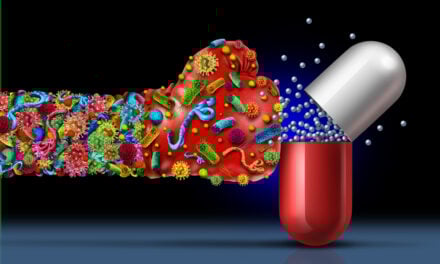
Analysis of international surveillance data shows rising resistance to last-line antibiotics, with significant regional variations in treatment outcomes.

A new study reveals that using minimally invasive blood collection devices can increase involvement of people experiencing homelessness.





While the concept of diagnostic windows has been developed in cancer research, this study examines whether it is relevant for other diseases.





New research has identified specific genes which could provide vital information about the biology of developmental coordination disorder, or dyspraxia.
Read More
“If trials don’t report on the characteristics of the people being studied, there is no way to know that the study’s findings will apply to all populations,” says the researcher who led the study.
Read More
The researchers say that, with the help of machine learning, wearable device data on heart rate, body temperature, and daily activities may be used to predict health measurements that are typically observed during a clinical blood test.
Read More
The authors provide actionable steps that researchers and the biomedical community can take to promote more inclusivity in preclinical and basic science research.
Read More
Researchers have revealed how variants of a gene responsible for packing and condensing genetic material present a novel cause for certain neurodevelopmental disorders.
Read More
Researchers developed a first-of-its-kind molecular catalog of cells in healthy lungs and the lungs of people with cystic fibrosis.
Read More
The OMNY Health Platform is a healthcare data-sharing solution that accelerates innovation by connecting the healthcare ecosystem with opportunities to connect anonymized data with researchers from life sciences organizations.
Read More
Researchers found low blood levels of immune cells called lymphocytes, in combination with higher levels of inflammation on PET/CT scans, are indicators of active sarcoidosis—an inflammatory disease that attacks multiple organs, particularly the lungs and lymph nodes.
Read More
Akershus University Hospital and Bio-Me are collaborating on a study of the long-term effects of covid-19 in adolescents and young adults, investigating the involvement of the microbiome.
Read More
New research findings offer hope that a new test could be developed to diagnose Parkinson’s through a simple and painless skin swab.
Read More
The study suggests that such liquid biopsies could help personalize treatment for oligometastatic colorectal cancer.
Read More
New research has shown that results of blood tests routinely performed by GPs everywhere contain a hidden fingerprint that can identify people silently developing potentially fatal liver cirrhosis.
Read More
J. Craig Venter shares in Scientific American his experience mapping the human genome and his frustrations with how little progress we’ve made in putting it to use 20 years later.
Read More
The Gibco CTS OpTmizer Pro Serum Free Media is a first-of-its-kind media-solution that targets the metabolism of healthy donor cells, making it ideally suited for use in the production of allogeneic, off-the-shelf cell therapies.
Read More
The UT Dallas researchers’ sensor is a portable device that monitors a panel of five immune biomarkers using only a single drop of blood plasma, making a sepsis diagnosis available within minutes.
Read More