Studies Identify Blood Tests That Could Reduce Need for Liver Biopsies
New findings show how blood-based biomarkers could improve detection of advanced liver disease and guide decisions about further testing.


New findings show how blood-based biomarkers could improve detection of advanced liver disease and guide decisions about further testing.
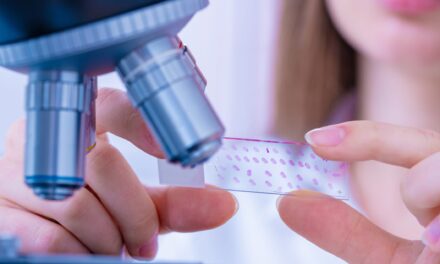
An independent validation study of 426 patients evaluated the assay's ability to assess 10-year recurrence risk and identify patients more likely to benefit from radiation therapy.






An ancillary analysis of the phase III NRG/RTOG 0815 trial shows Veracyte’s Decipher Prostate test can predict which intermediate-risk prostate cancer patients benefit from adding hormone therapy to radiation.




5Q Spectra plans to launch the Prostate Dx blood test, designed to help assess prostate cancer risk after elevated PSA results and potentially reduce unnecessary biopsies.
Read More
Labcorp has acquired MLM Medical Labs, expanding its central laboratory network to four continents and strengthening biomarker and specialty testing capabilities for clinical trials, according to a company announcement.
Read More
AI models analyzing routine H&E slides can identify genomic alterations and immune patterns in NSCLC, supporting biomarker discovery and patient stratification, according to studies to be presented by Lunit at WCLC 2026.
Read More
Kumamoto University researchers have developed a blood test that analyzes nucleosome structures in cell-free DNA to detect breast cancer recurrence.
Read More
A study validates Nu.Q NETs H3.1 nucleosomes as independent predictors of 28-day mortality and renal replacement therapy need in sepsis and septic shock, according to VolitionRx.
Read More
Humanity Health and Quest Diagnostics have launched a biological age analysis add-on for select health profile tests in the US, allowing users to assess aging biomarkers using routine blood samples.
Read More
A Johns Hopkins study reports that adding three urine biomarkers to standard assessments raises the accuracy of predicting deceased donor kidney transplant success from 80% to 86%.
Read More
The FDA has cleared Roche’s Elecsys pTau217 blood test to aid in identifying Alzheimer disease amyloid pathology, marking the first single-biomarker assay for both rule-in and rule-out use on existing lab instruments.
Read More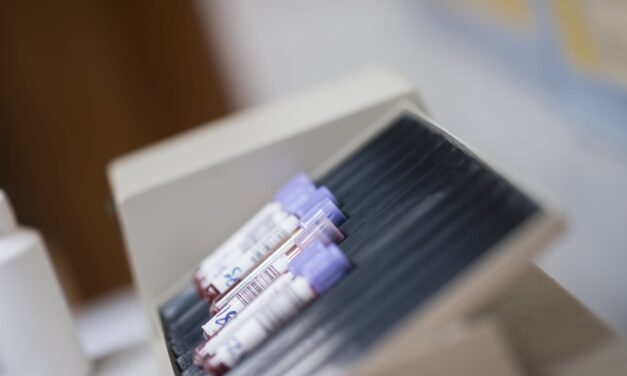
The FDA has cleared the first blood-based Alzheimer’s test authorized for symptomatic adults as young as 40.
Read More
Amsbio has launched synthetic cell mimic controls for flow cytometry, aiming to improve lot-to-lot consistency and reproducibility in diagnostics and cell therapy manufacturing.
Read More
Tel Aviv University researchers have developed a low-cost blood test that detects lung cancer by analyzing optical DNA fingerprints, achieving 93.1% sensitivity and 90.3% specificity.
Read More
Researchers at MUSC Hollings Cancer Center have developed the ADLiB liquid biopsy platform, which uses machine learning to prioritize lymphoma diagnosis, identifying high-risk patients with up to 95% accuracy.
Read More
VolitionRx has published peer-reviewed data on its Capture-Seq technology, reporting over 99% pure ctDNA isolation from plasma and 95% detection of early-stage cancers in validation cohorts.
Read More
Caris Life Sciences has launched in-house PTEN IHC testing to identify prostate cancer patients eligible for FDA-approved, biomarker-guided therapy, supporting precision treatment for PTEN-deficient mAPMN/S prostate cancer.
Read More
The funding will support the expansion of the Syn-One Test, a skin biopsy-based laboratory developed test for neurodegenerative diseases.
Read More