CirrusDx Adds Lab Testing for Recently Approved UTI Antibiotic
The new capability helps clinicians determine if a patient's infection will respond to gepotidacin before prescribing the treatment.
Diazyme Laboratories has acquired Carolina Liquid Chemistries, integrating CLC’s chemistry systems and reagents with Diazyme’s diagnostic technologies to expand solutions for reference and clinical laboratories.
A new position statement warns that albumin-adjusted calcium formulas are unreliable and may lead to patient misclassification.
The FDA has granted Breakthrough Device Designation to Valar Labs’ Vesta Bladder Risk Stratify Dx, the first AI-powered digital pathology prognostic test for bladder cancer.
The panel integrates biomarker testing and digital tools to support fibrosis risk assessment and liver cancer surveillance.
The study identifies HAVCR1 as a tool for earlier detection and treatment monitoring for primary central nervous system lymphoma.
Bio-Rad has expanded its TrailBlazer StarBright Dye Label Kits to 32 options, now available in Europe for flow cytometry and fluorescent western blot applications, according to the company.
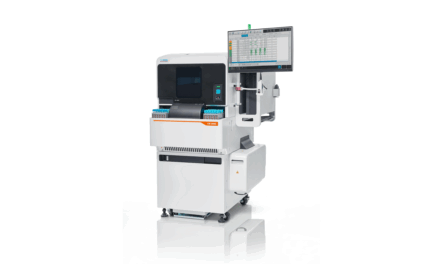
The XR-Series features higher throughput and enhanced analytics to streamline daily laboratory operations.
Roche has received CE mark approval for its Elecsys pTau217 blood test, designed to aid in Alzheimer’s disease diagnosis by detecting amyloid pathology in patients with cognitive decline.
The new triple quadrupole mass spectrometry system aims to increase sample throughput and simplify interference removal.
New research indicates that standard and modified two-tiered testing algorithms fail to detect infection in up to 78% of patients during the early stages of the disease.
The integrated electrophoresis solution is designed to simplify routine verification by eliminating gel casting and buffer preparation.
The cobas liat system delivers PCR results in 15 minutes, detecting and differentiating between three Bordetella pathogens including whooping cough.
The technology provides rapid resistance profiling for recurrent or complicated infections and is approved for use in all 50 US states.