Blood Test Shows Promise for Detecting Precancerous Ovarian Lesions
Researchers identified an RNA biomarker that detected precancerous fallopian tube lesions with 92.3% sensitivity and 98.2% specificity in a validation cohort.


Researchers identified an RNA biomarker that detected precancerous fallopian tube lesions with 92.3% sensitivity and 98.2% specificity in a validation cohort.

The new platform offers custom panel manufacturing in as little as one day to support development of tumor-informed MRD assays.






In a study of 372 patients, the model closely matched results from a 70-gene genomic test and identified differences in long-term survival.






Quest Diagnostics and Waters Corp will expand at-home HPV screening nationwide in 2027, offering extended genotyping via the FDA-cleared Onclarity Self-Collection Kit through clinical, health plan, and consumer channels.
Read More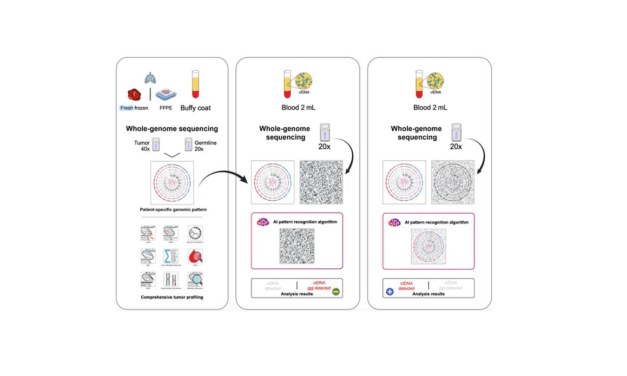
A study in The Journal of Molecular Diagnostics found that liquid biopsy tests can detect lung cancer recurrence months before imaging, using ctDNA analysis to monitor relapse risk in early-stage NSCLC patients.
Read More
Guardant Health will present 25 abstracts at ESMO 2026, highlighting new data on ctDNA liquid biopsy for cancer monitoring, including MRD surveillance and therapy resistance in lung, colorectal, and gastric cancers.New research examines how circulating tumor DNA testing could help detect cancer recurrence, track treatment response, and identify resistance across multiple cancer types.
Read More
A study of more than 60,000 lung cancer cases found that AI could predict the presence of 12 biomarkers with more than 80% sensitivity, potentially helping laboratories prioritize additional testing.
Read More
Biodesix and Vanderbilt have partnered to develop an AI-powered lung cancer risk test that combines blood-based and imaging biomarkers, with initial data to be presented at RSNA 2026 and commercial launch targeted for 2028.
Read More
SOPHiA GENETICS and Myriad Genetics are collaborating to develop a decentralized prostate cancer companion diagnostic, aiming to enable local labs to assess DNA repair deficiencies using the PrGIS biomarker in clinical trials.
Read More
Keck Medicine of USC has launched a phase 1 trial to assess whether a liquid biopsy detecting rare cells and extracellular vesicles can help identify early-stage breast cancer alongside standard mammography.
Read More
Aignostics has launched HETA Clinical, an AI-based suite for digital pathology that analyzes whole-slide H&E images to assess tumor content and tissue quality, aiming to reduce molecular test failure rates in clinical labs.
Read More
A modeling study presented at ACG 2026 projects that blood-based colorectal cancer screening averts more deaths and increases colonoscopy completion rates compared to stool-based methods, according to data from Guardant Health.
Read More
The DNA-based test showed 96.8% specificity in cervical samples and could help physicians determine which patients need further testing for endometrial cancer.
Read More
Biodesix presented data at CHEST 2026 from over 2,000 patients in the CLARIFY study, highlighting how Nodify Lung blood-based testing integrates with PET imaging to improve follow-up adherence for pulmonary nodules.
Read More
Analyzing the structure of existing biomarkers could reveal new information about cancer, helping laboratories deliver more accurate and clinically useful results.
Read More
Castle Biosciences’ new data presented at ACG 2026 show the TissueCypher test offers objective risk stratification for Barrett’s esophagus progression, providing information beyond standard histopathology.
Read More
IMS Solutions, a University of Birmingham and Imperial College London spin-out, has raised £1.1 million to commercialize mass spectrometry-based steroid biomarker tests for adrenal cancer and PMOS, with clinical validation underway.
Read More
New data show high diagnostic performance for ovarian, endometrial, and cervical cancers, with a targeted assay designed to run on existing clinical laboratory equipment.
Read More