Biotia Launches Antimicrobial Resistance Test for Complicated UTIs
The technology provides rapid resistance profiling for recurrent or complicated infections and is approved for use in all 50 US states.
The test uses urinary volatile organic compound patterns and machine learning to aid in the diagnosis of Alzheimer’s disease.
Laboratories are leveraging established diagnostic and surveillance tools to track the Andes hantavirus outbreak linked to a cruise ship, with experts noting no evidence of widespread community transmission or efficient airborne spread.
The FDA has granted Breakthrough Device Designation to Valar Labs’ Vesta Bladder Risk Stratify Dx, the first AI-powered digital pathology prognostic test for bladder cancer.
The Keck School of Medicine of USC and Hamamatsu Corp have partnered to deploy NanoZoomer slide scanners, studying digital pathology workflow improvements in real-world lab environments to enhance efficiency and patient outcomes.
Researchers at Mass General Brigham identified 16 routine lab markers, including cholesterol and glucose, linked to PTSD’s physical effects, suggesting standard tests could aid in assessing the disorder’s multi-organ impact.
Bio-Rad has expanded its TrailBlazer StarBright Dye Label Kits to 32 options, now available in Europe for flow cytometry and fluorescent western blot applications, according to the company.
Staffing shortages are prompting clinical labs to prioritize automation, standardization, and preanalytical safeguards when selecting hemostasis analyzers.
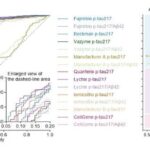
Roche has received CE mark approval for its Elecsys pTau217 blood test, designed to aid in Alzheimer’s disease diagnosis by detecting amyloid pathology in patients with cognitive decline.
AOA Dx presented data at AACR 2026 supporting its AKRIVIS GD Test System, a multi-omic, blood-based assay for early ovarian cancer detection in symptomatic women, reporting an AUC of 0.92 in clinical controls.
New research indicates that standard and modified two-tiered testing algorithms fail to detect infection in up to 78% of patients during the early stages of the disease.
The FDA has approved Guardant360 Liquid CDx, a blood-based test that integrates genomic and epigenomic profiling for advanced cancer, offering a broader genomic footprint and faster results.
The cobas liat system delivers PCR results in 15 minutes, detecting and differentiating between three Bordetella pathogens including whooping cough.
A rapid urine test identified effective UTI antibiotics in an average of 5.85 hours, matching standard lab accuracy in a University of Reading study published in the Journal of Antimicrobial Chemotherapy.