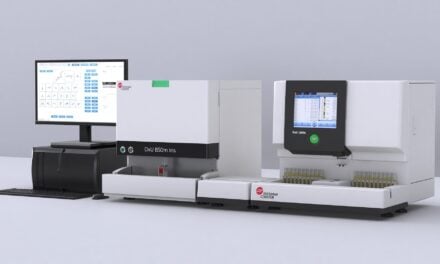
Questions Labs Are Asking Before Investing in Hemostasis Systems
As laboratories weigh new hemostasis investments, Sysmex experts discuss the questions that can help guide system selection.
Hair drug test positivity among US workers rose to 19.1% in 2025, a 46% increase since 2021, with marijuana accounting for over half of positive results, according to the 2026 Quest Diagnostics Drug Testing Index.
A new position statement warns that albumin-adjusted calcium formulas are unreliable and may lead to patient misclassification.
Researchers at MD Anderson have developed an AI-based pathology tool that predicts immunotherapy response in rare cancers by analyzing immune cell changes in biopsies, according to a Journal for ImmunoTherapy of Cancer study.
Spotlight Medical’s myStage Dx AI breast cancer test has received CE marking under EU IVDR, enabling adoption in European oncology and pathology labs for recurrence risk assessment in ER+/HER2- early breast cancer patients.
The assay measures lipoprotein(a) levels in molar units to improve cardiovascular risk assessment and standardization across laboratories.
Research suggests new sequencing technologies can help labs move from tissue-level averages to cell-specific testing for precision exercise medicine.
The new service supports transplantation medicine for 13 million people across Northern California and Northern Nevada.
The automated assay identifies latent infections in routine laboratory settings with results available in less than 24 hours.
The noninvasive method uses paper spray and mass spectrometry to identify disease biomarkers in less than 30 seconds.
The Fleming Initiative and Cepheid have launched a 30-month study in England to compare rapid molecular and traditional culture screening for drug-resistant carbapenemase-producing Enterobacterales in hospital settings.
Bio-Rad has launched Vericheck ddPCR kits for quality control in cell and gene therapy manufacturing, offering validated workflows for mycoplasma detection, capsid analysis, and residual DNA quantification.
The cobas liat system delivers PCR results in 15 minutes, detecting and differentiating between three Bordetella pathogens including whooping cough.
The screening tool identifies specific molecules produced by gut bacteria to distinguish children with autism from typically developing peers.