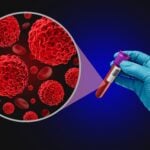
Caris Life Sciences Launches New Blood Test for Early Cancer Detection
The test utilizes genomic sequencing and AI to identify biological signals associated with early-stage disease.
CNSide Diagnostics has secured a national agreement with Elevance Health, expanding access to its CSF Tumor Cell Enumeration assay to 45.4 million more people in the US, Plus Therapeutics announced.
A new position statement warns that albumin-adjusted calcium formulas are unreliable and may lead to patient misclassification.
Early results indicate the process could reduce sample preparation time by approximately 40% to 50%, while improving consistency by removing variability linked to staining conditions.
A study reports that an OpenAI reasoning model improved rare disease diagnostic yield by 4.8% in previously unsolved cases, offering new leads after specialist analysis.
Research suggests that only 12% of men receiving testosterone prescriptions underwent appropriate testing.
Bio-Rad has expanded its TrailBlazer StarBright Dye Label Kits to 32 options, now available in Europe for flow cytometry and fluorescent western blot applications, according to the company.
Elevated donor-derived cell-free DNA levels are linked to higher kidney transplant failure risk, suggesting earlier detection of allograft injury before loss of kidney function.
The assay is CE marked under the European Union In Vitro Diagnostic Regulation and identifies resistance genes to help prevent hospital-acquired infections.
New updates include expanded capabilities for microbial identification and advancements in sepsis diagnostics and sequencing workflows.
The Fleming Initiative and Cepheid have launched a 30-month study in England to compare rapid molecular and traditional culture screening for drug-resistant carbapenemase-producing Enterobacterales in hospital settings.
The point-of-care assay provides results in 15 minutes and received a waiver for use in decentralized settings.
The cobas liat system delivers PCR results in 15 minutes, detecting and differentiating between three Bordetella pathogens including whooping cough.
The screening tool identifies specific molecules produced by gut bacteria to distinguish children with autism from typically developing peers.